
How to add photos to your memoir or life story book: 8 practical tips

Adding photos to a memoir or life story book is a great way to make the finished book more personal. But knowing which photos to include, how to organize them, and where they should appear isn't always straightforward.
You might have hundreds of family photographs stored in albums, boxes, or on your computer. Some may be faded or damaged. Others might be missing dates or names. And you may not be sure how many to include or whether they will look good in print.

The good news is that you don't need perfectly organized albums or professional-quality photographs to get started.
At My Stories Matter, we’ve helped many people choose, restore, and thoughtfully place family photos in their memoirs and life story books. Drawing on that experience, here are eight practical tips to help you select, prepare, and include photos in your own book.
1. Choose photos that help tell your story
When choosing photos for a memoir, start with the stories you want to tell rather than trying to include every photograph you own.
Think about the important people, places, and moments covered in your book. Which photographs would help someone reading those stories better understand what happened?
For example, if you're writing about your childhood, you might include a photograph of your family home, your school, or the people you grew up with.
If you're describing your working life, a photograph of your first job or an important milestone might fit naturally into that chapter.
The most useful photos aren't always the most impressive ones. They're the ones that add something meaningful to the story. If you're still deciding which stories and memories belong in your book, our guide to what to include in a memoir can help you narrow them down.
2. Focus on quality, not quantity
It's tempting to include as many photographs as possible, especially when you've spent years collecting them. But more isn't always better.
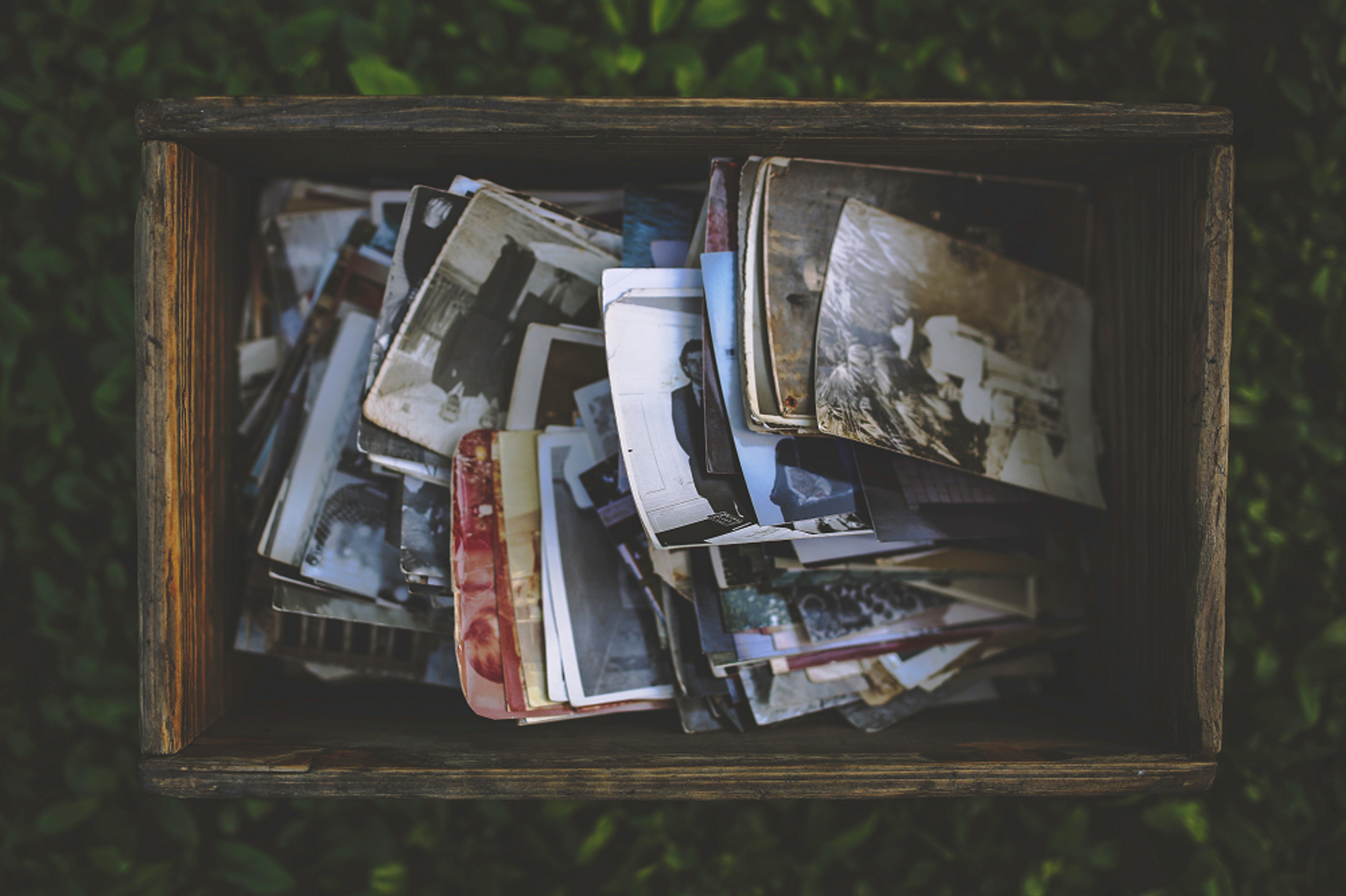
Too many photos can make a book feel cluttered or distract from the writing. Rather than including several similar photographs from the same occasion, try choosing one or two that best capture the moment.
That doesn't mean you need to limit yourself to a certain number. Some memoirs work beautifully with a handful of photographs, while others benefit from many more.
The right number depends on your story, the length of your book, and how much space you want to give the images.
A useful question to ask is:
Does this photo add something that the others don't?
If it introduces someone important, shows a meaningful place, or captures a significant moment, it's probably worth considering.
3. Include more than just family portraits
When people think about adding photographs to a memoir, they often start with portraits, weddings, birthdays, and family gatherings.
These are all valuable, but don't overlook the other things you may have collected over the years. A life story book can also include images of:
- Handwritten letters, postcards, and diaries
- Family recipes and old documents
- School photographs and certificates
- Newspaper clippings
- Military medals or uniforms
- Old homes, cars, and workplaces
- Tickets, invitations, and other meaningful keepsakes
Sometimes an old letter or recipe card can tell just as much of a story as a photograph.
For example, including a handwritten recipe from your grandmother can preserve not only a family tradition, but also her handwriting. Think beyond photographs of people and consider the objects, documents, and places that help tell your story.
4. Organize your photos by chapter or life stage
You don't need a complicated filing system to organize your memoir photographs. One of the easiest approaches is to group them by the chapters or periods of your life.
You might create folders for childhood, school years, early adulthood, marriage, family life, travel, working life, and retirement.
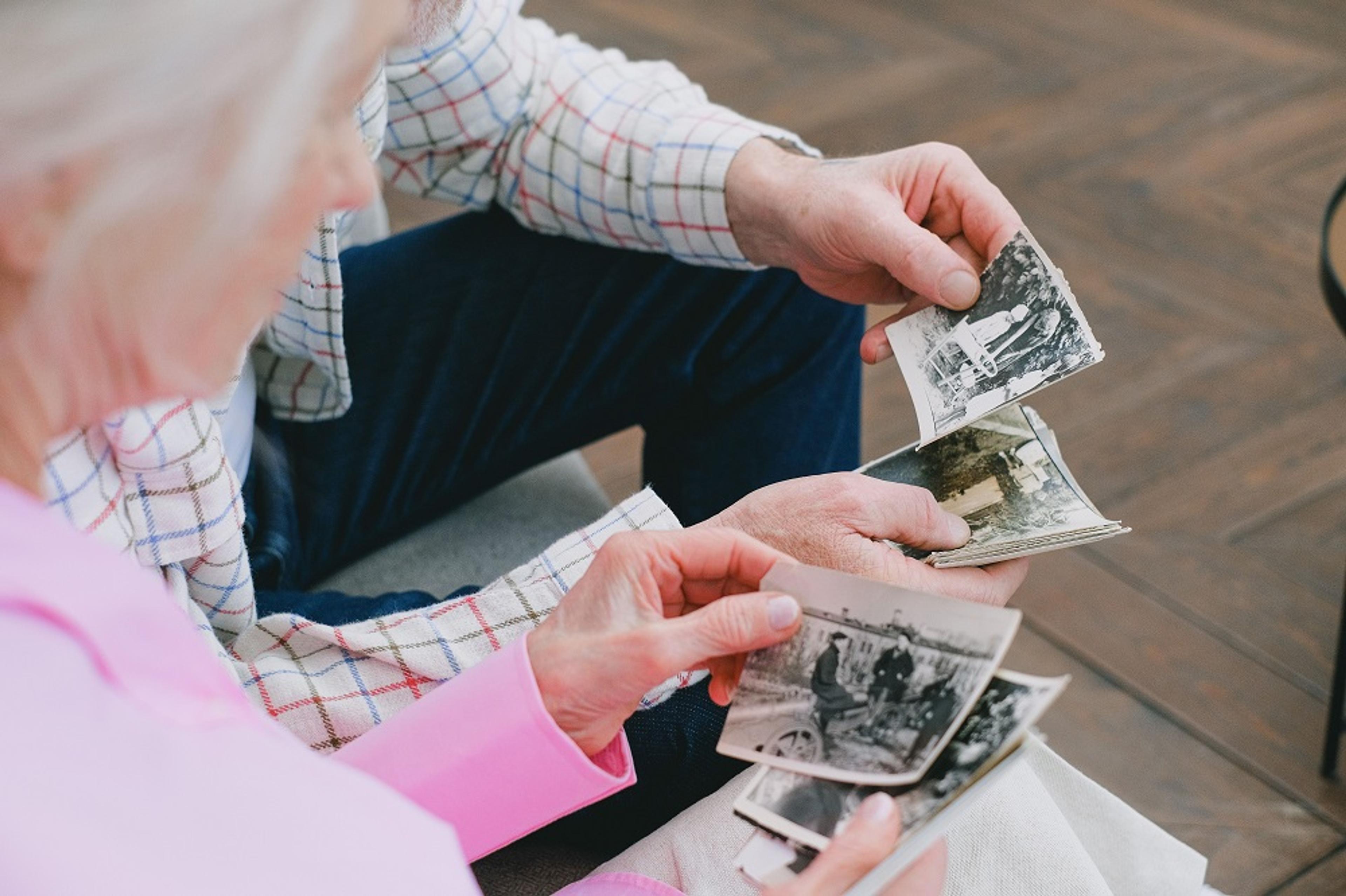
If you've already written your memoir, you can organize photos around the existing chapters instead. If you're still deciding how to organize your writing, our guide on how to structure your memoir can help you plan your chapters before matching photographs to them.
Give each file a simple, descriptive name where possible. For example, "Family home 1965" is much easier to identify later than "IMG_0047."
You can also keep a separate folder for photos you're unsure about. The aim is simply to make it easier to find the right image when you need it. And don't worry if everything isn't perfectly organized. You can always sort through the photographs as the book comes together.
5. Scan old photos carefully
Many of the most meaningful photographs in a memoir are older prints stored in family albums or boxes.
If you want to include them in a printed book, it's usually best to scan them rather than photograph them with your phone.
A good scan can capture more detail, avoid glare and shadows, and give you a better starting point if the photograph needs editing or restoration.
For most printed photographs, scanning at 300 dpi or higher is a useful starting point. Small originals that may need enlarging can benefit from a higher scanning resolution.
If you don't have access to a scanner, a carefully taken phone photograph can still work. Try to use natural, even lighting, keep the camera directly above the photograph, and avoid reflections.
It's also worth keeping the original, unedited digital file. That way, you always have a copy to return to if changes are needed later.
6. Add captions so future generations know what they're looking at
A photograph that makes perfect sense to you may be a mystery to someone reading your memoir fifty years from now.
You may know exactly who is pictured, where the photograph was taken, and why it matters. Your grandchildren or great-grandchildren may not.
That's why captions are so valuable. A caption can be as simple as:
"My parents outside their first home in California, around 1965."
Or it might add a little more context:
"Our first family holiday to Florida in 1978. Dad insisted on driving the entire way!"
Try to include names, relationships, places, or dates where you know them. If you're unsure about something, it's fine to say "around 1970" or "believed to be." You don't need to guess.
This is also a good opportunity to involve other family members. A sibling, cousin, or older relative may recognize someone you've forgotten or remember the story behind an old photograph.
A few words of context can make a photograph much more meaningful for future generations.
7. Don't dismiss old, faded, or damaged photos
Some of your most meaningful family photographs may not be in perfect condition.
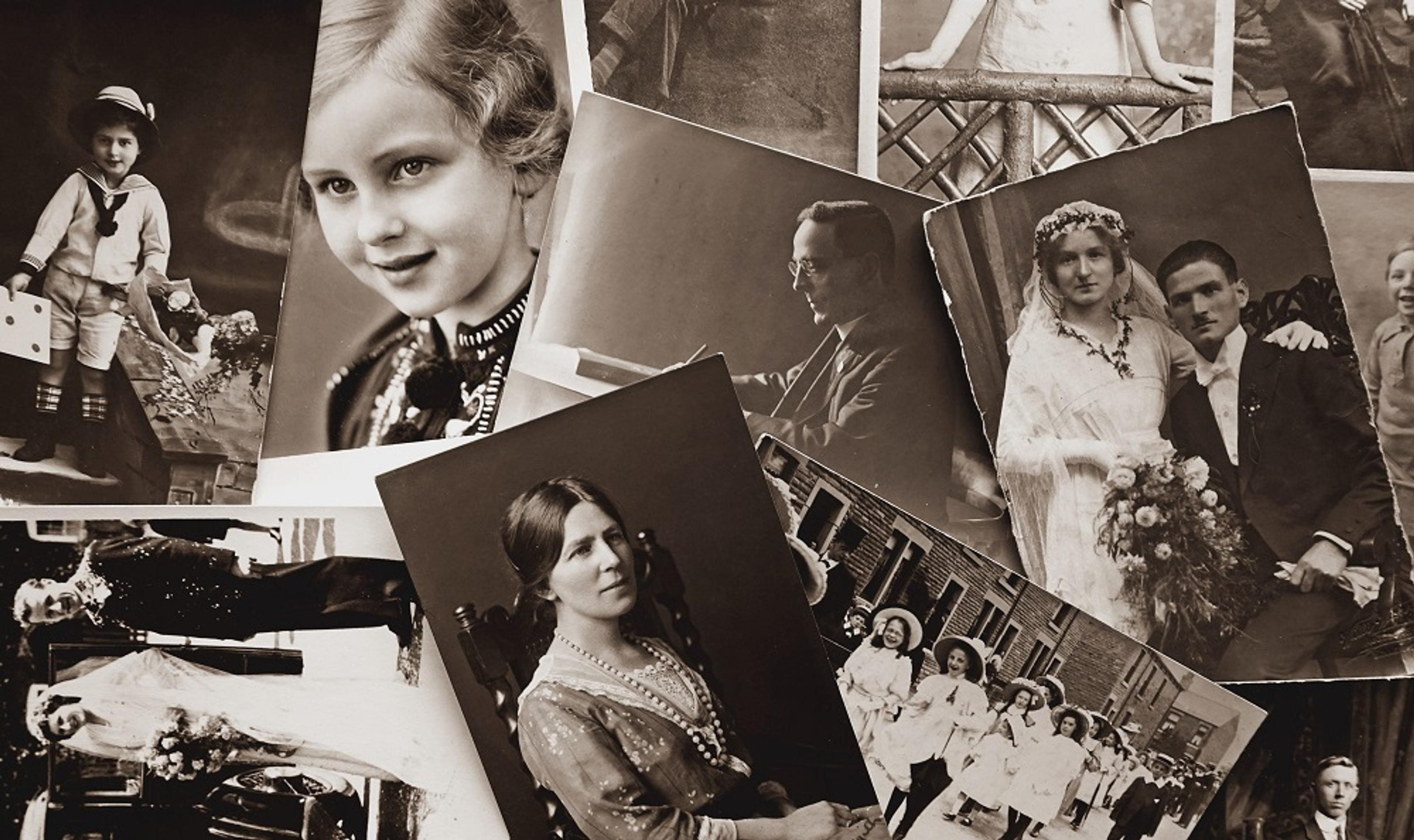
They might be faded, scratched, torn, discolored, or slightly blurry. You may even have photographs that are the only surviving image of a particular person or moment. Don't automatically leave them out.
Photo restoration and enhancement can sometimes improve damaged or faded images, making them clearer and more suitable for printing. This might involve adjusting brightness and contrast, removing marks or scratches, or improving the overall appearance of an older photograph.
Of course, not every photograph can be fully restored, and it's important to preserve the original image rather than changing meaningful details.
Even if a photograph cannot be improved much, it may still deserve a place in your memoir. Sometimes the emotional value of a photo matters far more than its technical quality.
8. Think about where photos belong in the book
Once you've selected your photographs, the next question is where they should appear. There are a few different approaches.
Some memoirs include photographs throughout the story, placing them alongside the people, places, or events being described. Others group photographs together in dedicated sections, perhaps at the end of a chapter or in a photo gallery.
For a private family memoir, placing images alongside the relevant stories can work particularly well. It allows the reader to see the photograph while reading about the moment.
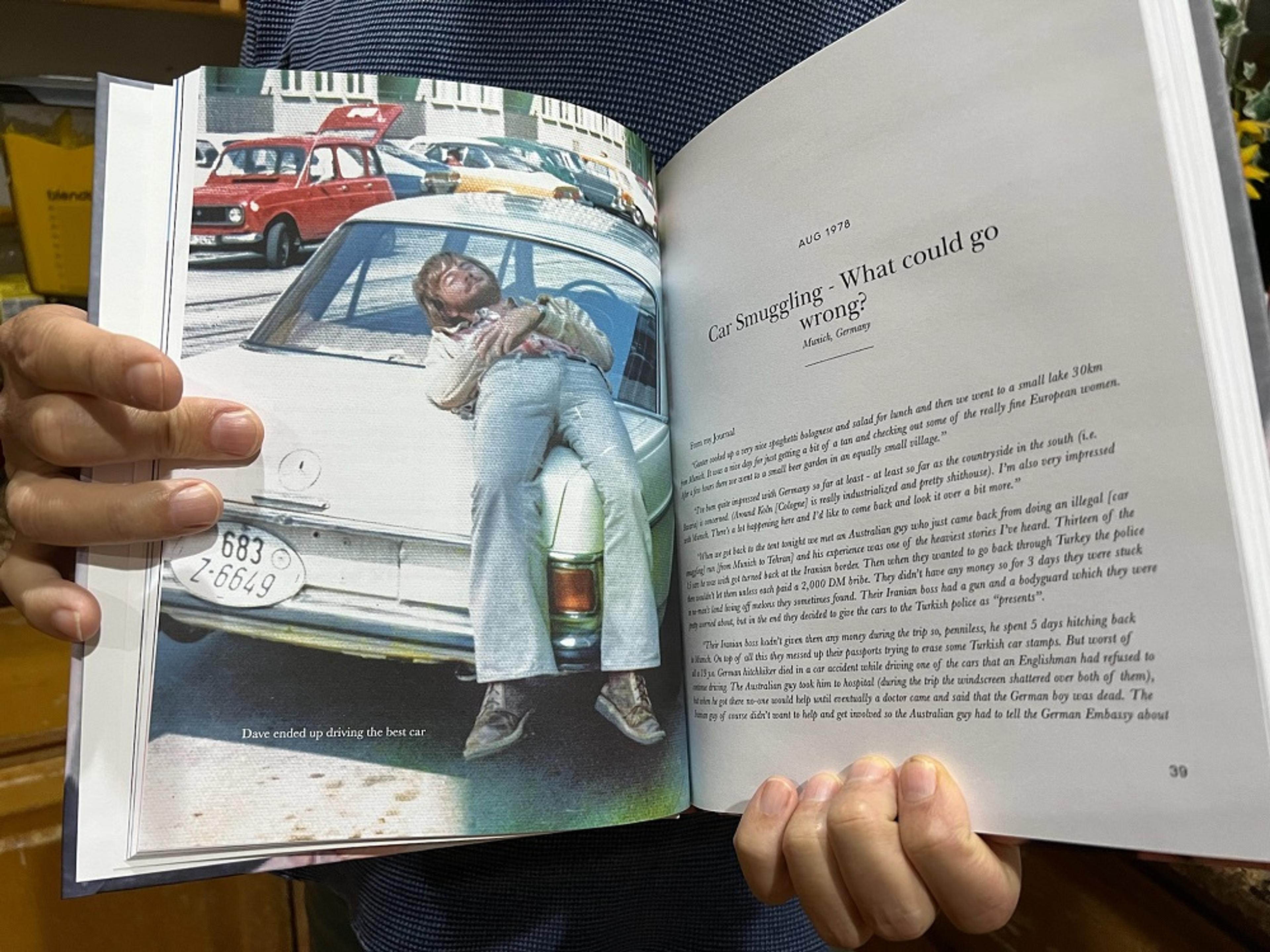
It's also important to leave enough space for the photos to be enjoyed. Trying to fit too many images onto a single page can make them difficult to see, particularly in a printed book.
You don't need to work out the complete layout yourself. A book designer can help decide which photographs work best together, how large they should appear, and where they should be placed.
The aim is to make the photographs feel like a natural part of the story rather than something added at the end.
If you've already finished writing your story, our guide to what to do after you've written your memoir covers the next steps, including editing, photos, book design, and printing.
Bringing your photos and stories together
Adding photos to your memoir doesn't need to be complicated. Start by identifying the images that matter most, organize them as best you can, and add whatever information you know about the people and places pictured.
You don't need to have every photograph ready before you begin writing, and you don't need to decide exactly how the finished pages will look.
The important thing is to choose photographs that help tell your story and preserve the details you want future generations to remember.
If you'd like to explore why photographs can make such a difference, read our article, 6 reasons why photos matter in a memoir.
How My Stories Matter can help
At My Stories Matter, we help people turn memories, written material, recordings, photographs, and family stories into professionally designed hardcover memoirs and life story books.
You can send us digital photographs, old family prints, scanned documents, letters, and other meaningful material.
Depending on your project, our team can help organize and prepare photographs, restore or enhance older images where possible, and place them thoughtfully throughout your book.
Our memoir design and printing service can also help bring everything together, making sure your photos, captions, and written stories work together to create a professionally designed hardcover book.
You don't need to know how many photos to include, how to prepare them for printing, or where they should appear on the page. Our team can help guide you through those decisions.
Whether you've already written your memoir or are just beginning to collect your memories, we can help bring your stories and photographs together into a hardcover book your family can treasure.


