
What to do after you’ve written your memoir

Finishing your memoir is a huge achievement. Whether you have a complete manuscript, a rough draft, or a collection of stories you have been adding to for years, you have already done one of the hardest parts: getting your memories down.
But once the writing is finished, or almost finished, many people are unsure what to do next.

The next stage is about taking what you have written and turning it into something organized, readable, thoughtfully designed, and ready to share.
Here are the most important steps to consider after you’ve written your memoir.
1. Decide what kind of book you want to create
Before you edit, design, or print your memoir, it helps to think about the purpose of the finished book.
Some people write mainly for family. They want a private memoir for children, grandchildren, relatives, or close friends. The goal is not to sell thousands of copies. It is to preserve memories, family history, photos, values, and personal stories in a form loved ones can keep.
Others want to publish more widely. They may want the memoir available through Amazon, bookstores, libraries, or public distribution. That usually requires a different kind of publishing plan, with more attention on marketing, distribution, retail listings, reviews, and reaching readers who do not already know the author.
These are very different goals.
A private family memoir usually needs careful editing, good organization, photo support, professional book design, and quality printing. A public memoir may also need a broader publishing strategy.
Knowing which direction you are heading will help you choose the right next step.
2. Read your memoir as a reader
Once your draft is complete, try to read it from beginning to end as though you are reading someone else’s book.

This can be difficult because the memories are personal. You know the people, places, and background. But your future readers may not. Even family members may need more context than you expect.
As you read, notice where the manuscript feels clear, and where it starts to feel confusing, repetitive, or too long. Look for places where a story seems to end too quickly, where an important person is mentioned without explanation, or where the timeline jumps in a way that may be hard for someone else to follow.
You do not need to fix everything immediately. At this stage, the goal is to understand the shape of the manuscript.
Many people find it helpful to print the draft, or at least export it as a PDF. Reading away from the writing screen can make the manuscript feel more like a book and less like a working document.
3. Think about the structure
A memoir does not have to cover every year of your life in exact order.
Some memoirs work best chronologically, beginning with childhood and moving through major life stages. Others are organized by theme, such as family, work, travel, faith, military service, lessons learned, or important relationships. Some focus on a particular period of life rather than trying to include everything.
If you’re unsure how to arrange your chapters, our guide to how to structure your memoir can help you choose the right shape for your story.
After the writing is done, you may discover that the structure you started with is not the structure the book now needs. That is normal.
A manuscript that began as a simple timeline may work better as a series of themed chapters. A collection of separate stories may need stronger chapter headings or short introductions. A very long draft may need to be divided into clearer sections so the reader has a sense of direction.
Good structure does not mean making the book formal or complicated. It simply means helping the reader move through the story comfortably.
Sometimes the manuscript does not need a major rewrite. It may only need better chapter order, clearer section breaks, shorter paragraphs, or smoother transitions between memories.
4. Look for missing context
When you have lived the story yourself, it is easy to leave out details that would help someone else understand it.
You might mention a childhood home, a family friend, a workplace, a military posting, or a major life decision without realizing that future readers may not know why it mattered.
This is especially important when a memoir is written for children, grandchildren, and later generations. They may love the stories, but they may not know the background.
As you review the manuscript, ask yourself:
- Have I clearly introduced the important people?
- Would a reader understand where and when this story is happening?
- Have I explained why this moment mattered?
- Are there names, places, or relationships that need more context?
This does not mean adding endless detail. A memoir should still feel readable and personal. But a few extra lines of context can make a story much more meaningful for family members who were not there.
If you’re still deciding which stories matter most, our guide to what to include in your memoir can help you narrow it down.
5. Gather the photos and family material
Photos can make a memoir feel much more personal, especially when the book is meant for family.
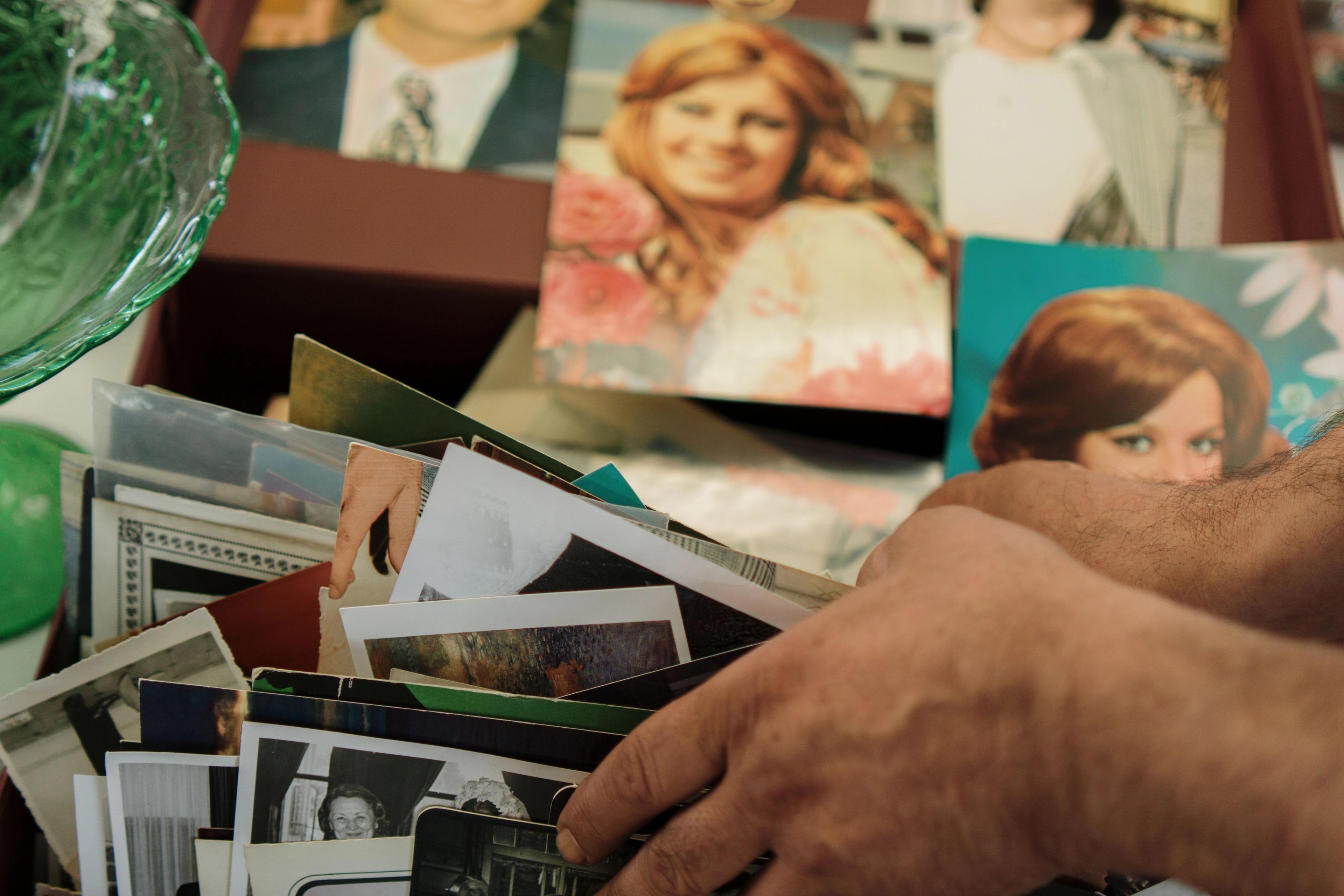
After the writing is complete, begin gathering the images and materials you may want to include. These could include:
- Childhood, wedding and family photos
- Travel, military, or work photos
- Letters, postcards, or handwritten notes
- Newspaper clippings, certificates, or documents
- Recipes, maps, or family trees
Don't worry too much at first about where every image will go. Start by collecting what you have.
Once everything is together, you can begin matching photos to chapters, stories, or life stages. Photos can also help you bring a memory to life, especially when they remind you of details, places, or people you might otherwise leave out.
Old or damaged photos should not be dismissed too quickly. Many family photos are faded, discolored, scratched, or poorly exposed, but may still be suitable for a memoir after restoration or enhancement.
6. Add captions where they matter
Captions are easy to overlook, but they can be one of the most valuable parts of a family memoir.
A photo that feels obvious today may be confusing in twenty years. Future readers may not know who is in the picture, where it was taken, or why it matters.
A good caption does not need to be long. It only needs to preserve the information that might otherwise be lost.
For example, instead of simply placing a photo on the page, you might add:
My parents, Robert and Elaine, outside their first home in Ohio, around 1958. They had saved for years to buy that house, and my mother always said it was where our family truly began.
That kind of caption turns a photo into part of the story. It gives future generations names, places, dates, and meaning.
7. Decide whether the manuscript needs editing
Even a strong memoir usually benefits from another set of eyes.
Editing does not mean changing your voice or making the book sound like someone else wrote it. Good memoir editing should make the story clearer, smoother, and easier to read while still preserving the author’s personality.
Some manuscripts mainly need proofreading. This means checking spelling, punctuation, grammar, typos, and consistency of names, dates, and places.
Other manuscripts need more editorial help. They may have repeated stories, very long paragraphs, uneven chapter lengths, confusing sections, or places where the flow could be improved.
Many memoirs need a mixture of both.
A private family memoir does not need to sound like a literary novel. It does not need to be perfect. But it should be clear, readable, and comfortable to share.
8. Think about the design of the finished book
A memoir is not just a manuscript. The finished book experience matters.
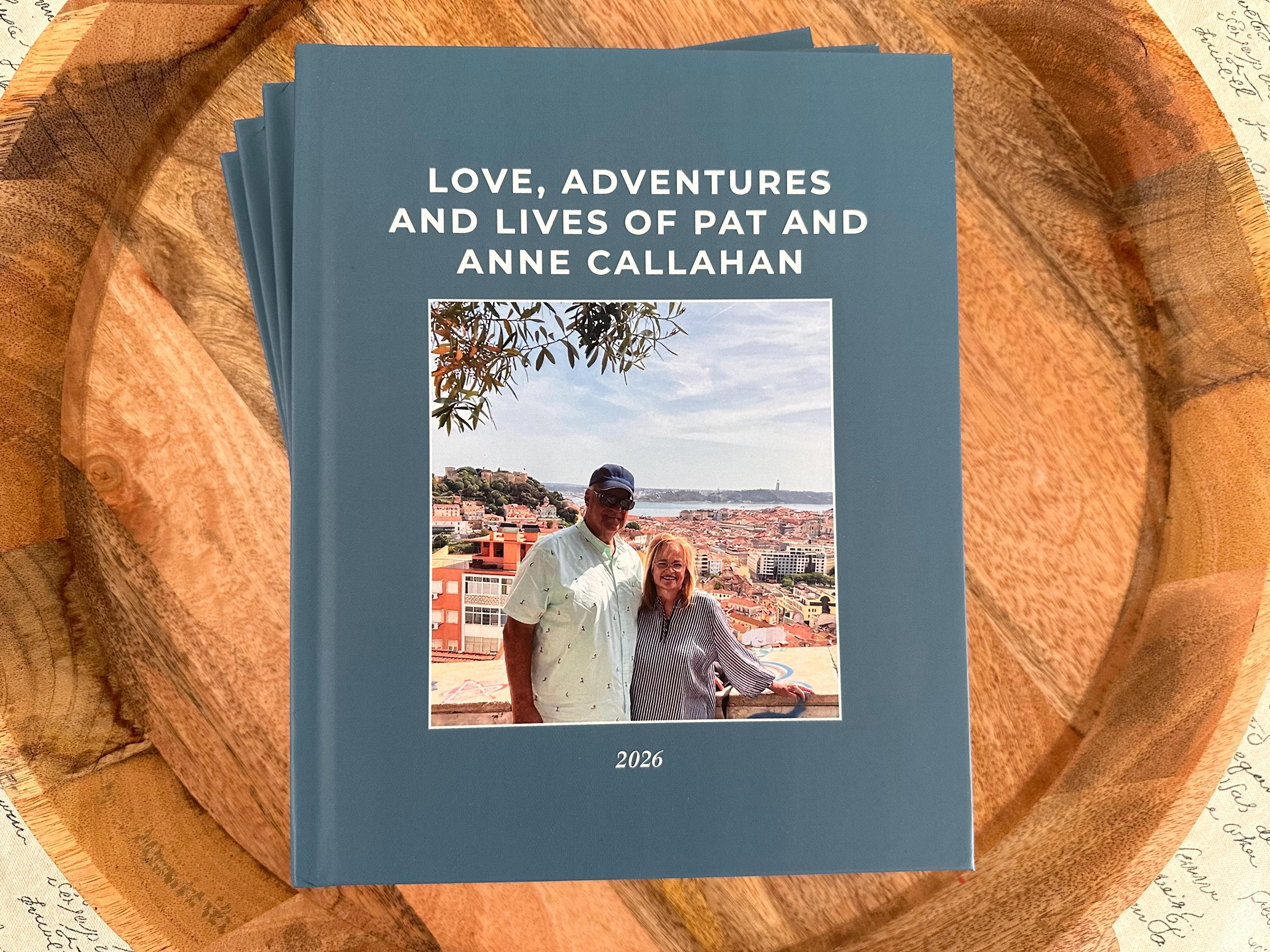
Design affects how the story feels, how easy it is to read, and how proud the author feels sharing it.
A professionally designed memoir may include a custom cover, interior page layout, chapter title pages, thoughtful font choices, page numbers, photo placement, captions, section breaks, family trees, timelines, footnotes, or an index.
The design should support the story rather than distract from it. A simple, elegant layout is often best, especially for a private family memoir.
This is also where a Word document starts to become a real book. The same words can feel very different once they are properly laid out, paired with photos, and placed inside a finished hardcover book.
9. Work out how many copies you need
Once the book begins to feel real, think about who should receive a copy.
Some people only need a few books. Others want copies for children, grandchildren, siblings, close friends, or everyone mentioned in the memoir. Some families create books for birthdays, holidays, anniversaries, reunions, or memorial occasions.
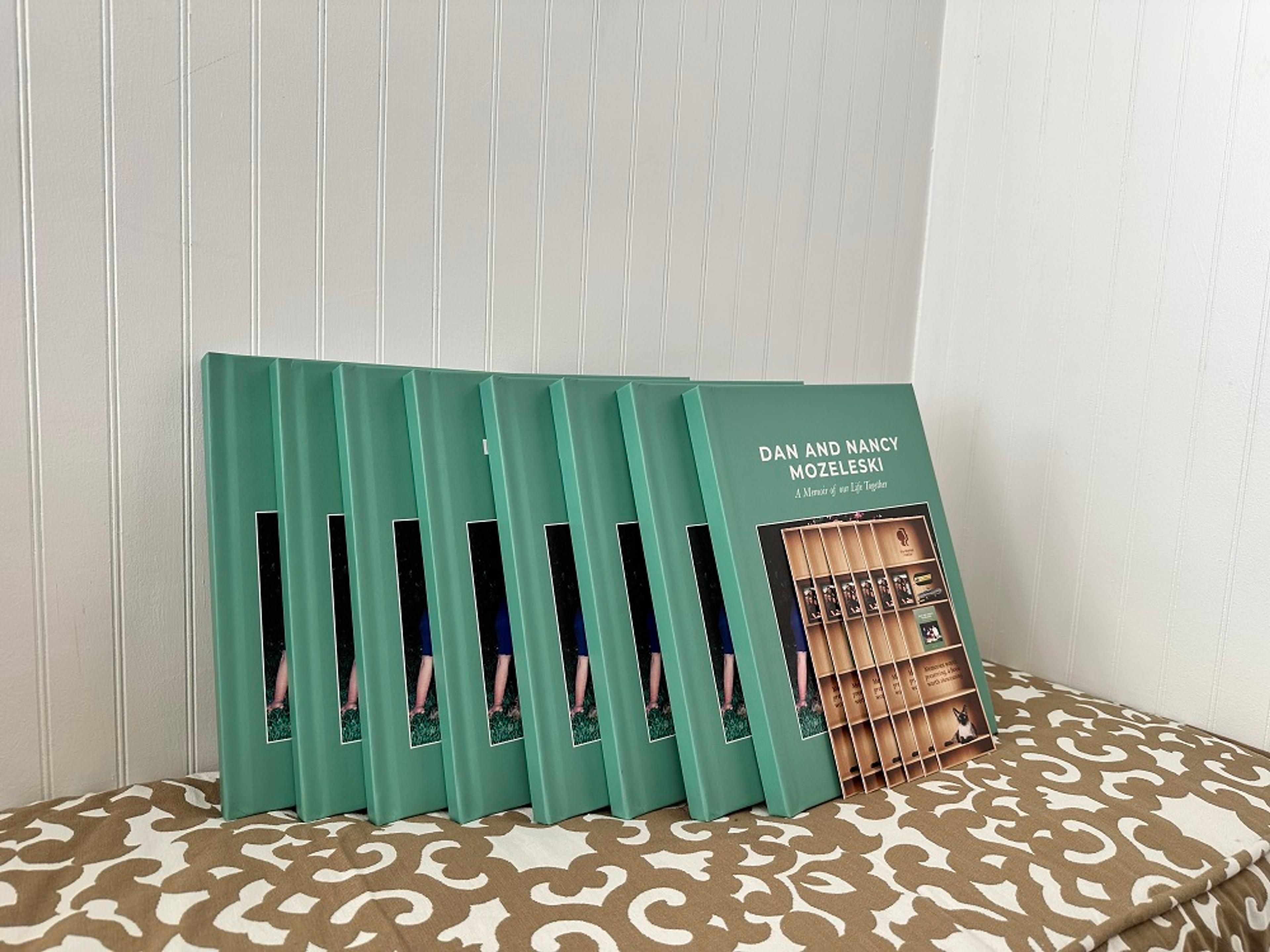
It is worth making a list before printing. This helps you understand whether you need one copy, a small family set, or a larger number.
You may also want to ask whether extra copies can be ordered later. Families often realize after the first print run that more people would like a copy.
10. Choose the right kind of help
After writing your memoir, there are several different routes you can take. You may also want to compare how much it costs to publish a memoir before choosing the right route.
Use a book printer
A book printer may be enough if your manuscript is already edited, designed, formatted, and print-ready.
This can be a good option if you already have professional files and only need physical copies.
But if your manuscript still needs editing, layout, cover design, photo placement, or guidance, a printer alone may not be enough.
Use a self-publishing company
A self-publishing company may be a good fit if you want to sell your memoir publicly or make it available through online retailers.
These services often focus on formatting, distribution, print-on-demand, ebooks, and sales channels.
They may be less focused on private family memoirs, old photos, personal design, or helping you shape a manuscript that is not quite finished.
Hire a memoir editor or book designer
A memoir editor or book designer may be useful if you already have a strong manuscript and only need help with one part of the process.
This route can work well if you are comfortable managing the project yourself and hiring different people for different stages.
The main thing to consider is that you may need to coordinate the editor, designer, photo preparation, printer, and any future changes yourself.
Use a guided memoir service
A guided memoir service may be the best fit if you already have written material and want help turning it into a finished private family book.
With My Stories Matter, for example, you can send your existing writing, photos, notes, recordings, or family material, and work with real people who help bring everything together.
This can include help with editing, structure, photos, custom design, and hardcover printing, without needing to manage several different professionals yourself.
11. Don't let the final steps stop the project
Many memoirs stall after the writing is done. The author has finished the hardest part, but the remaining steps feel unfamiliar.
Editing, organizing photos, choosing a cover, formatting the pages, deciding how to print, and working out how many copies to order can all feel like separate jobs.
It is easy to leave the manuscript sitting in a folder because the next step is unclear. But your memoir does not need to stay as a file on your computer.
With the right help, your written stories can become a finished book your family can hold, read, keep, and pass down.
How My Stories Matter can help
If you have already written your memoir, or even most of it, My Stories Matter can help you turn it into a professionally designed hardcover book.
You can send us your existing writing, photos, notes, recordings, or family material, and we can help bring everything together. Depending on your project, we can help organize your material, proofread and edit the manuscript, improve readability and flow, prepare and place photos, design the cover, create the interior layout, and print hardcover copies for family and friends.
My Stories Matter is especially suited to private family memoirs and life story books. If your main goal is bookstore distribution, sales and marketing support, a self-publishing or traditional publishing service may be a better fit.
But if you want to turn your existing writing into a polished, personal, professionally designed book for your family, we can help you take the next step.


