
How to bring a memory to life

Some memories stay vivid for decades. Others slowly fade around the edges. You might remember the broad outline of an event, a family holiday, your wedding day, a conversation with a loved one, or a childhood adventure, but struggle to recall the details that once made it feel so real.
The good news is that memories are often still there. Sometimes they simply need a little encouragement to resurface.
Whether you're writing a memoir, recording family stories, or simply reflecting on your life, learning how to bring a memory to life can transform a brief recollection into a rich and meaningful story.
Start with what you remember
Many people make the mistake of waiting until they can remember everything before they start writing. Don't. Begin with whatever you can recall, even if it's only a few details.
Perhaps you remember a place, a person, a smell, or a particular feeling. Write that down first. Often, one small detail leads to another. A memory that begins as a single sentence can gradually unfold into an entire story.
Memory works more like a trail of breadcrumbs than a complete photograph. The first step is simply following the trail.
Use your senses
One of the most effective ways to unlock memories is through the senses. Think beyond what happened and focus on what the experience felt like.
Ask yourself:
- What could I see?
- What could I hear?
- What could I smell?
- What could I taste?
- What could I touch?
Perhaps the memory involves the smell of your grandmother's cooking, the sound of waves during a family holiday, or the feel of sun-warmed grass beneath your feet.

Sensory details help transport you back into the moment and allow readers to experience it alongside you.
Focus on a single moment
When writing about the past, many people try to cover too much at once. Instead of describing an entire holiday, focus on one memorable afternoon.
Instead of writing about your whole childhood, write about one day at school, one family Christmas, or one summer adventure.
Specific moments are often far more powerful than broad summaries. A single scene can reveal far more about a person, relationship, or period of life than a lengthy overview ever could.
Bring the people back into the story
The people in our memories are often what make them meaningful. Think about who was there.
- What made them unique?
- How did they speak?
- What habits did they have?
- What made them laugh?
A few carefully chosen details can instantly bring someone back to life on the page.

You don't need a lengthy description. Sometimes one characteristic, a favourite saying, a distinctive laugh, or the way someone always wore a particular hat, is enough to make them feel real again.
Don't just describe what happened
Many people believe a memory is simply a sequence of events. In reality, what makes a memory interesting is often how you felt about it.
Readers don't just want to know what happened. They want to know what it meant. Ask yourself:
- How did I feel at the time?
- What was I worried about?
- What surprised me?
- What did I learn?
- How do I see the experience differently now?
This kind of reflection adds depth and transforms a simple recollection into a story with meaning.
One of the advantages of writing later in life is that you can view past experiences through the lens of wisdom and perspective.
Use photographs and keepsakes

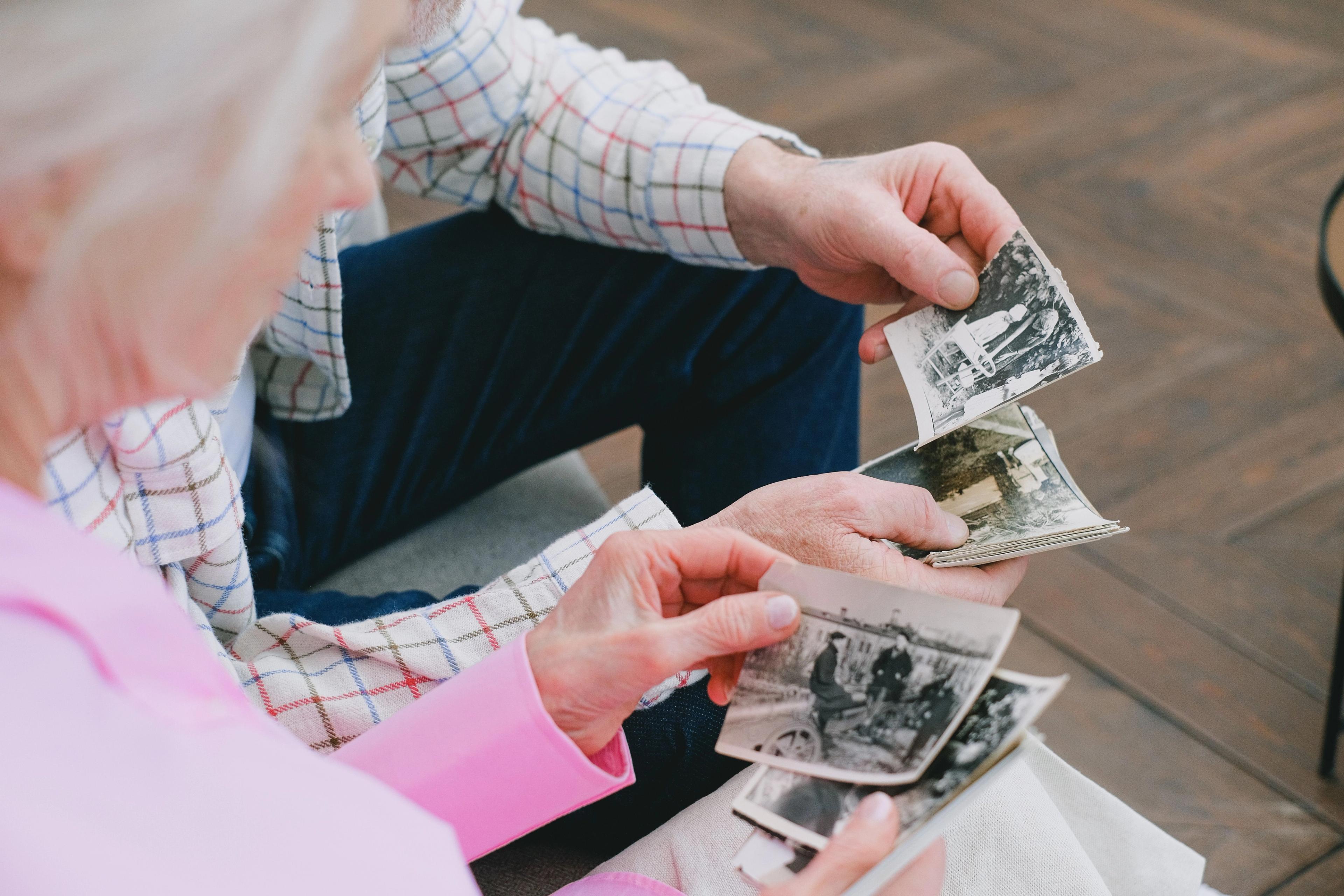
Sometimes memories need a little help. Old photographs, letters, postcards, school reports, newspaper clippings, and family heirlooms can all trigger memories that might otherwise remain hidden.
You may discover details you had forgotten entirely:
- The clothes people wore
- The layout of a room
- The expressions on people's faces
- The names of friends and relatives
Photographs are particularly powerful because they often reveal details that your memory no longer holds. Many memoir writers use old photographs as starting points for entire chapters.
Talk to other people
One of the best ways to bring a memory to life is to discuss it with someone who shared the experience. Siblings, friends, parents, children, and former colleagues can all provide additional perspectives.
If you’re not sure what to ask, these questions to ask family members can help start the conversation.

You may remember certain details they have forgotten, while they remember aspects you no longer recall. This doesn't mean one version is correct and the other is wrong. Memory is personal, and people often experience the same event differently.
These conversations can enrich your stories and help create a fuller picture of the past.
Accept that memory isn't perfect
A common mistake is worrying too much about accuracy. People often avoid writing because they're afraid they've forgotten parts of the story.
The truth is that memory is rarely perfect. What matters most is capturing the essence of an experience as honestly as possible.
Your memories are valuable not because they are flawless historical records, but because they reflect how you experienced the world. Future generations won't be looking for perfection. They'll be looking for connection.
Turn memories into stories
The final step is transforming a memory into a story. Every good story contains three simple ingredients:
- A setting
- People
- Change
Where were you? Who was involved? What happened that made the experience memorable?
Even ordinary moments become compelling when viewed through this lens.
A first day at work, a family road trip, a conversation with a grandparent, or a childhood mistake can all become meaningful stories when told well.

Why it matters
The memories we treasure most are often the ones we assume we'll never forget. Yet time has a way of softening even our most vivid recollections.
Writing down your memories helps preserve them, not only for yourself but also for the people who come after you.
Your children, grandchildren, and future family members may one day treasure stories that seem ordinary to you today. The sooner you capture them, the more detail and richness you'll preserve.
Final thoughts
Bringing a memory to life isn't about perfect recall. It's about curiosity.
It's about revisiting the people, places, emotions, and moments that shaped who you are. Start with one memory. Follow the details. Ask questions. Explore the feelings behind the facts.
You may be surprised by how much is still there waiting to be discovered. And once you've brought a memory back to life, you've taken the first step towards preserving it for generations to come.
If you’d like help preserving your memories in a life story book, My Stories Matter can guide you through the process.


