
Custom life story book covers: What makes a book feel personal?

A life story book or family history book is not only something people read. It is something they hold, display, gift, and pass down. That is why the cover matters.
The right cover can make a finished book feel connected to the person whose story it tells. The material, color, texture, lettering, spine, endpapers, and presentation all shape the first impression before anyone reads a single page.
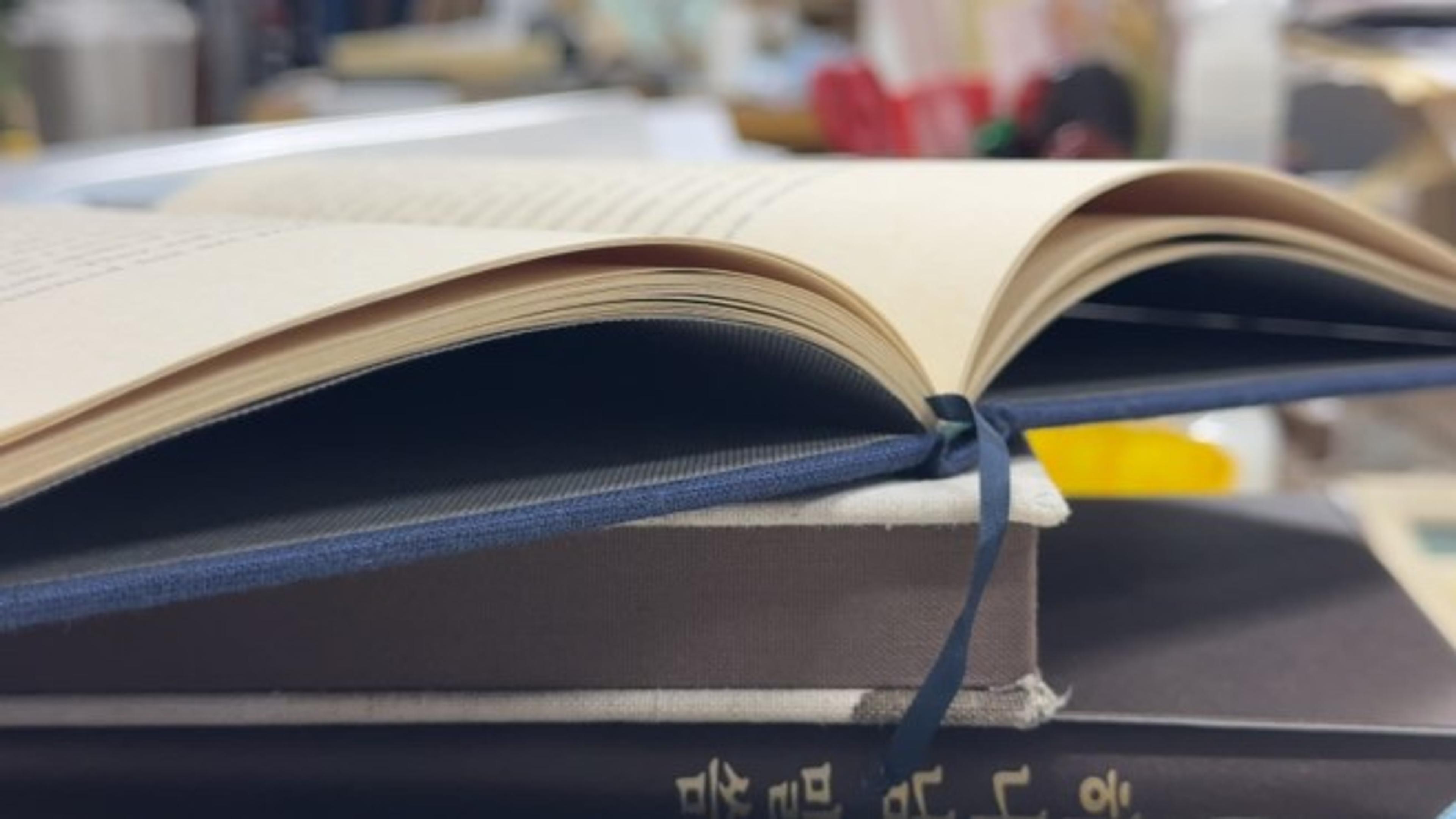
For most My Stories Matter books, a professionally designed hardcover is the right choice. But for selected special editions, families may want something more bespoke: a custom cover, hand-bound finish, meaningful material, or presentation box that makes the book feel even more personal.
To explore those possibilities, we visited Marumizu-Gumi, a hand-bookbinding studio in Tokyo. Here is what the visit showed us about custom family history book covers, and the details worth thinking about if you want a book that feels truly one of a kind.
Why the cover matters in a life story book
A life story book is different from an ordinary printed book. It may be created for a parent, grandparent, spouse, sibling, or future generations. It may include memories, photographs, family stories, letters, captions, life lessons, or a full memoir. It may be given as a milestone gift or kept as part of a family archive.
Because of that, the physical book carries emotional weight.
The cover is the first part of the book people see and touch. It sets the tone. A formal leather cover can make the book feel like an heirloom. A softer cloth or linen cover can feel warmer and more understated. A marbled-paper panel, personal label, or meaningful fabric can make the book feel less like a standard product and more like something made for one particular life.
A beautiful cover should never be a substitute for a thoughtful story, careful editing, or good design inside the book. But when the inside and outside work together, the finished book feels more complete.
Why we visited marumizu-gumi in tokyo
We spend most of our time thinking about the parts of a book people read: the story, structure, editing, layout, photographs, and proofing. But the outside of the book matters too.
For selected special editions, we wanted to understand what was possible when the cover and binding could be planned with more flexibility. That search took us to Marumizu-Gumi, a hand-bookbinding studio in Itabashi-ku, Tokyo, founded by its director and bookbinder, Nao Inoue.
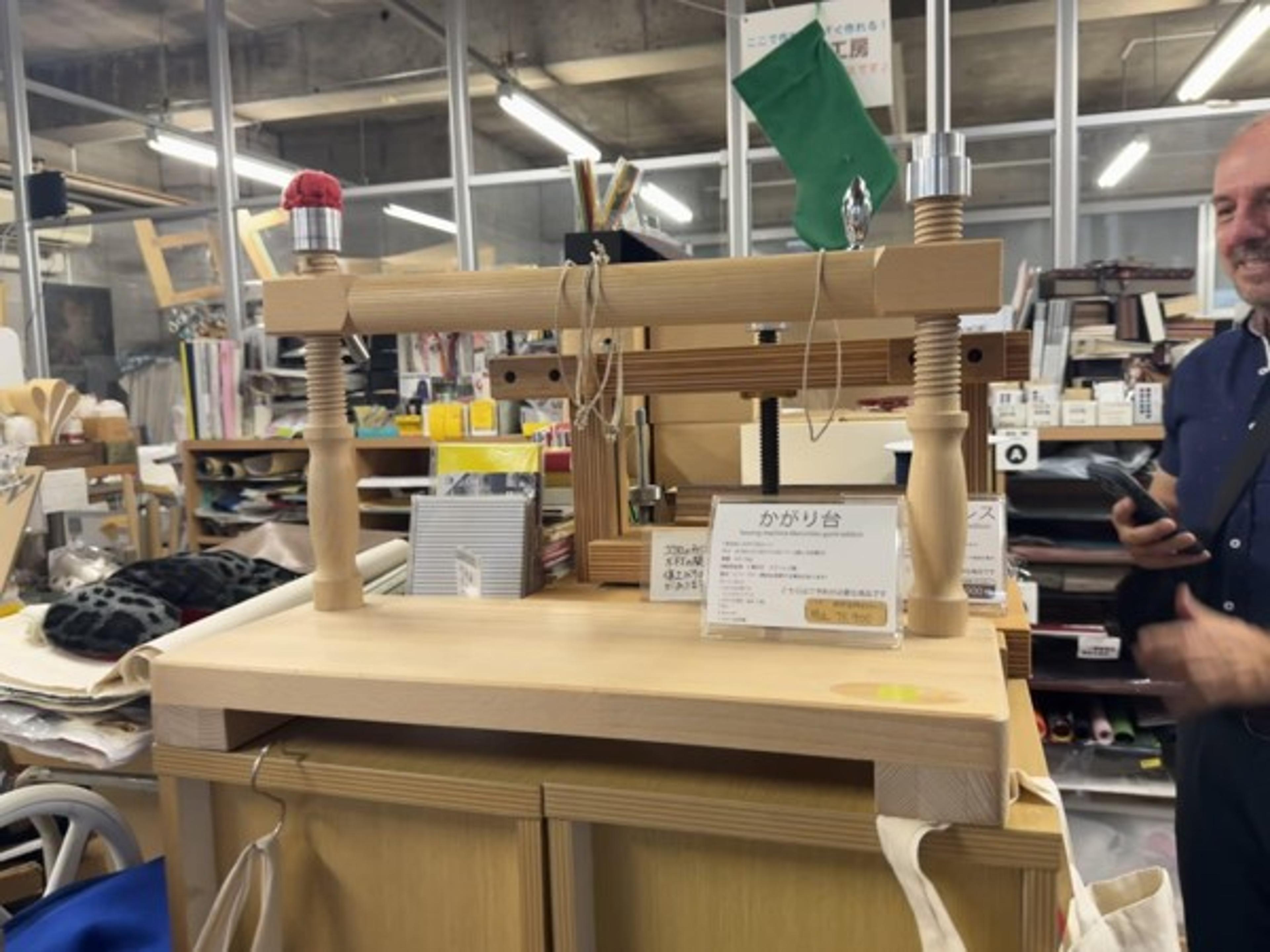
Marumizu-Gumi works with both European and Japanese bookbinding techniques, using handwork alongside appropriate industrial methods. Their work includes custom books, fine leather bindings, specially bound photo books, protective boxes, exhibition replicas, and other specialist commissions.
The studio felt like a working studio, not a showroom. Rolls of cloth and leather stood beside presses, tools, and works in progress. Finished examples were opened and examined at the bench. We compared flat and rounded spines, looked closely at sewn sections and headbands, and saw how small details can change the way a book feels in the hand.
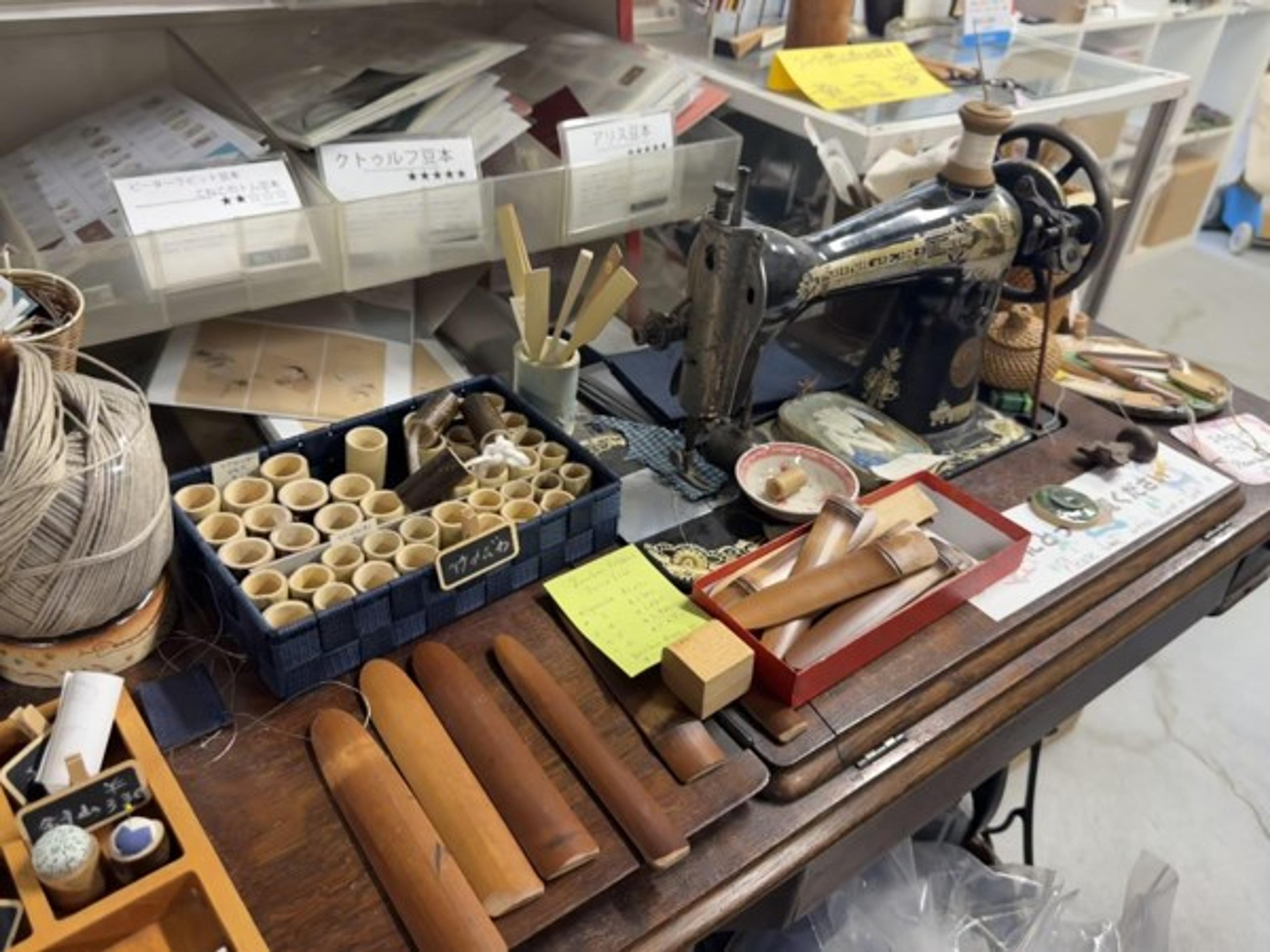
Marumizu-Gumi will be part of the My Stories Matter supply chain for selected orders, producing hand-bound editions when that level of finish suits the project.
This does not mean every My Stories Matter book will be made in Tokyo or bound by hand. Most families will still choose our standard professionally designed hardcover process. But for special editions, we now have access to a partner we have visited, questioned, and watched at work.
Choosing a cover material that fits the person
The cover material is one of the clearest ways to make a life story book feel personal.
At Marumizu-Gumi, we looked at options including smooth leather, pebbled or grained leather, suede, book cloth, linen, and marbled-paper panels set into the cover.
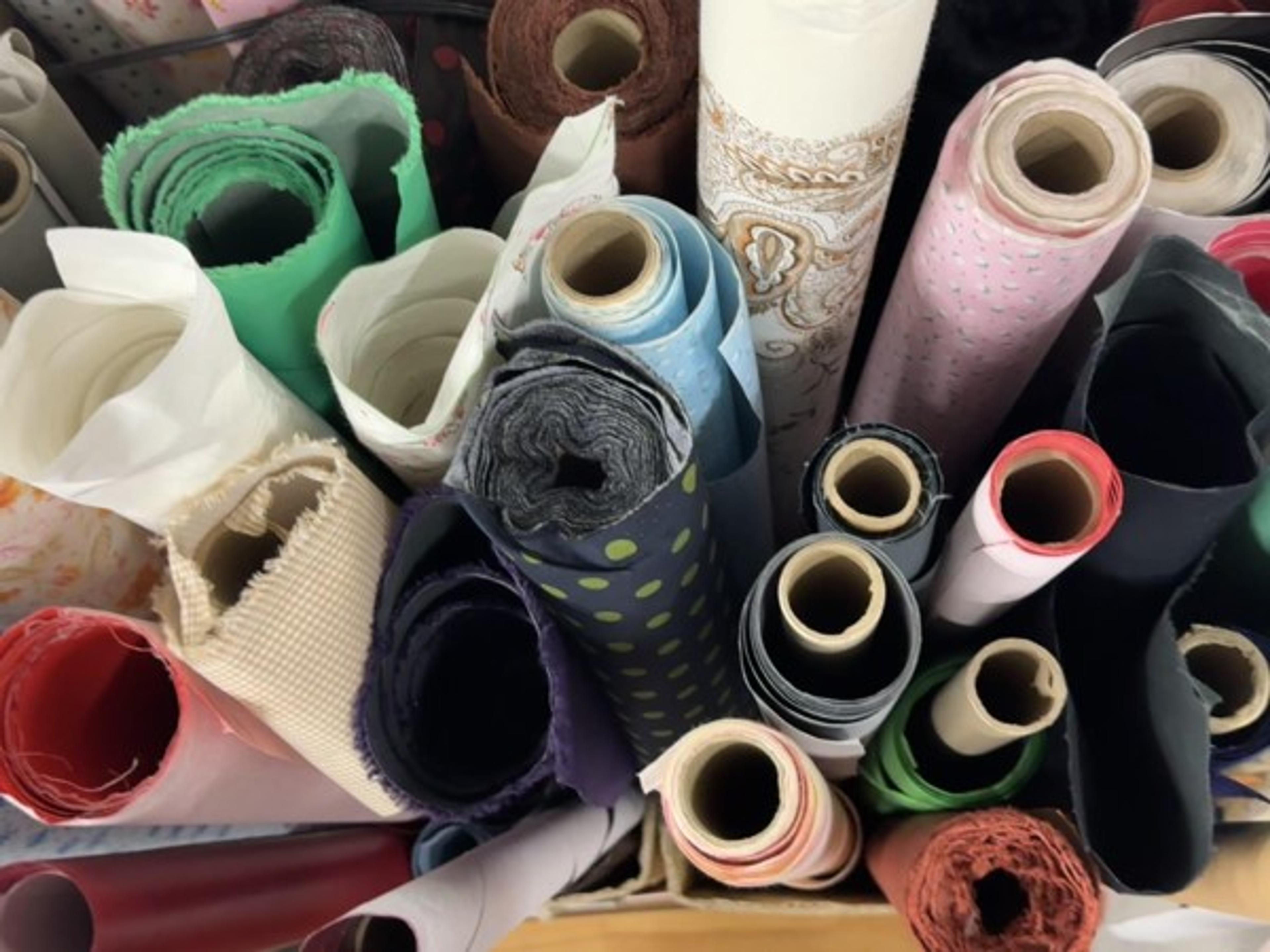
There is no single “best” material. Different materials create different feelings.
A dark leather cover may feel formal, traditional, and substantial. A linen or cloth cover may feel softer, quieter, and more familiar. A grained leather can add texture and depth. A marbled-paper panel can introduce pattern and movement without covering the whole book.
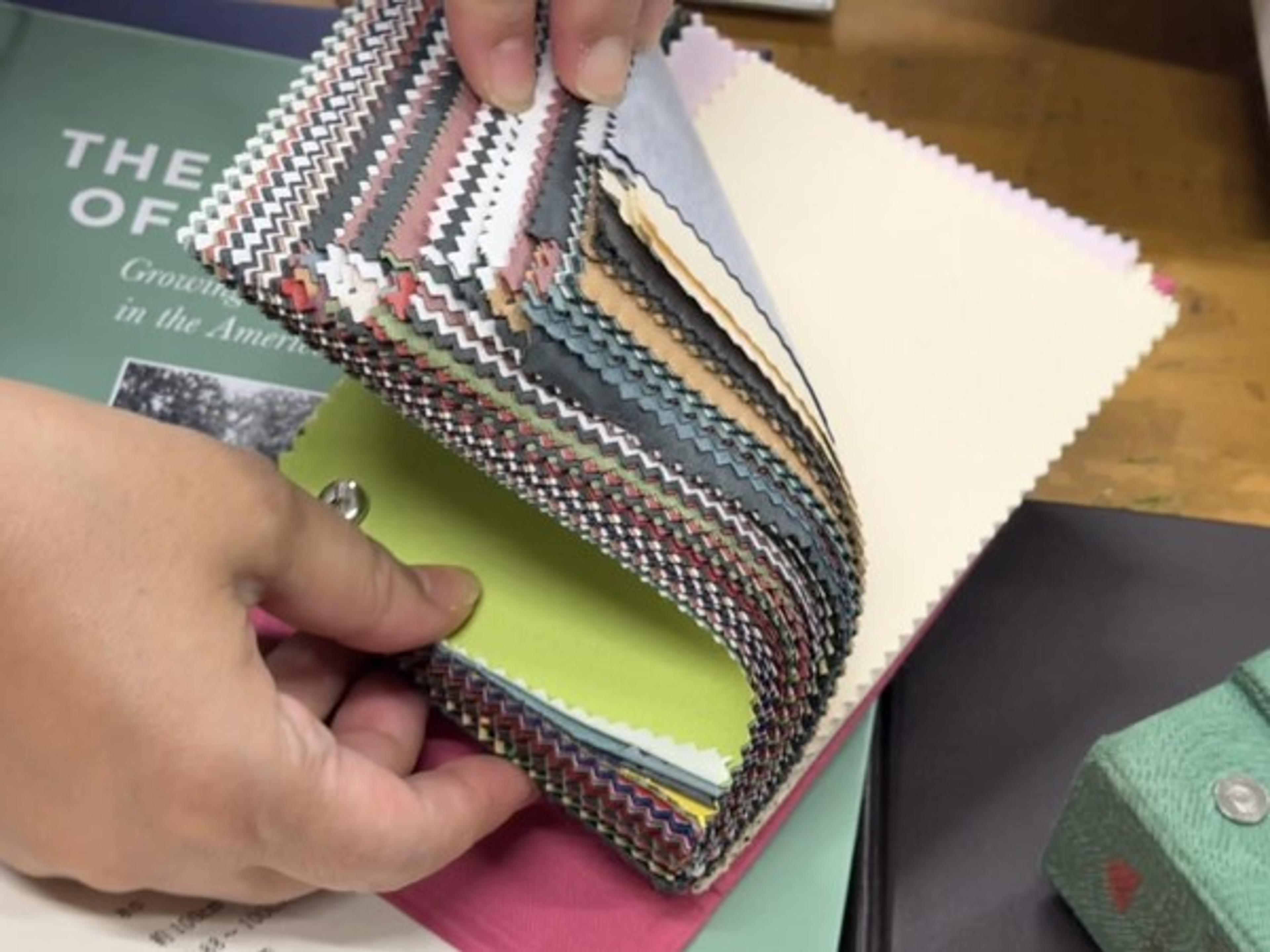
The right choice depends on the person, the story, the photographs, and how the family expects to use the book.
A book about a military career may call for a very different cover from a book about family recipes, childhood memories, travel, or a long marriage. A book created as a formal tribute may need a different feeling from one designed to be read casually by children and grandchildren.
The cover should not just look expensive. It should feel appropriate.
When a meaningful fabric can become part of the cover
The most memorable example we saw was not made from a standard bookbinding material. Nao showed us a book whose cover had been made from a doctor’s uniform.
We do not know the personal story behind that commission, so we will not invent one. But the example showed something important: when the material is suitable, something that already carries meaning can sometimes become part of the book itself.
That possibility could be relevant to a military uniform, a piece of work clothing, a family textile, or another fabric connected to the person whose story is being preserved.
This kind of detail has to be discussed early. Not every fabric will be suitable for binding, and not every book structure can support every material. The binder needs to assess the fabric, the design, and the practical requirements of the finished book.
But when it works, it can make the cover feel deeply personal. The book is no longer simply wrapped in a chosen material. It carries something from the life it is preserving.
Lettering, foil, and blind stamping
Once the cover material has been chosen, the finishing details begin to matter.
Lettering can be stamped on the front cover, the spine, or both. Gold and silver foil are familiar choices, but colored foils can also be considered. Blind stamping is another option, where the lettering or design is pressed into the material without adding foil.
Image: Foil colors can be compared against the chosen cover material before stamping.
Each choice gives a different effect.
Foil catches the light and makes the title more visible. Blind stamping is quieter and more tactile. It can feel understated, especially on leather, suede, cloth, or linen. A colored foil might suit a more personal or contemporary book, while gold or silver may feel more traditional.
These are small decisions, but they change the character of the book. The question is not simply, “Which option looks best?” It is, “Which option suits this person, this cover material, and this story?”
The details just inside the cover
A custom cover does not stop at the outside. The first details inside the book also shape how the finished edition feels.
Endpapers create the transition from the cover into the pages. They can be plain, colored, patterned, or chosen to complement the material on the outside.

Headbands are another small but noticeable detail. These are the narrow bands visible at the top and bottom of the spine where the pages meet the cover. They can add a subtle line of color and make the book feel more carefully finished.
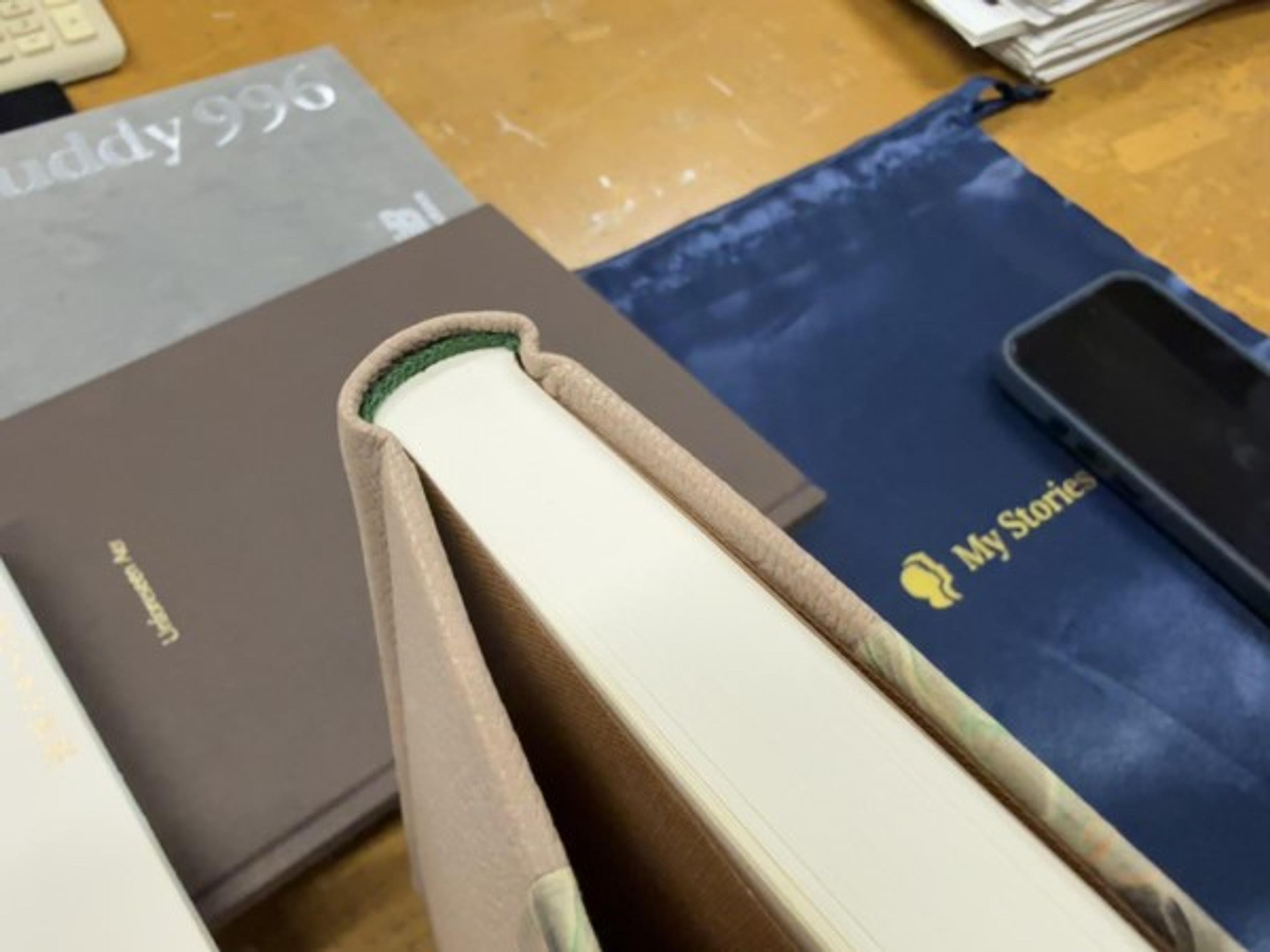
These details are easy to skip over in a list of specifications. In person, they are immediately noticeable. They help the book feel considered from the outside in.
Binding choices change how the book feels
The cover material and finishing details are the most visible parts of a custom life story book. But the binding also affects how the book feels, opens, and sits.
A spine may be flat or rounded. Our current hardcover books use a flat-spine style. A rounded spine has a curved profile and gives a thicker volume a different presence on the shelf and in the hand.
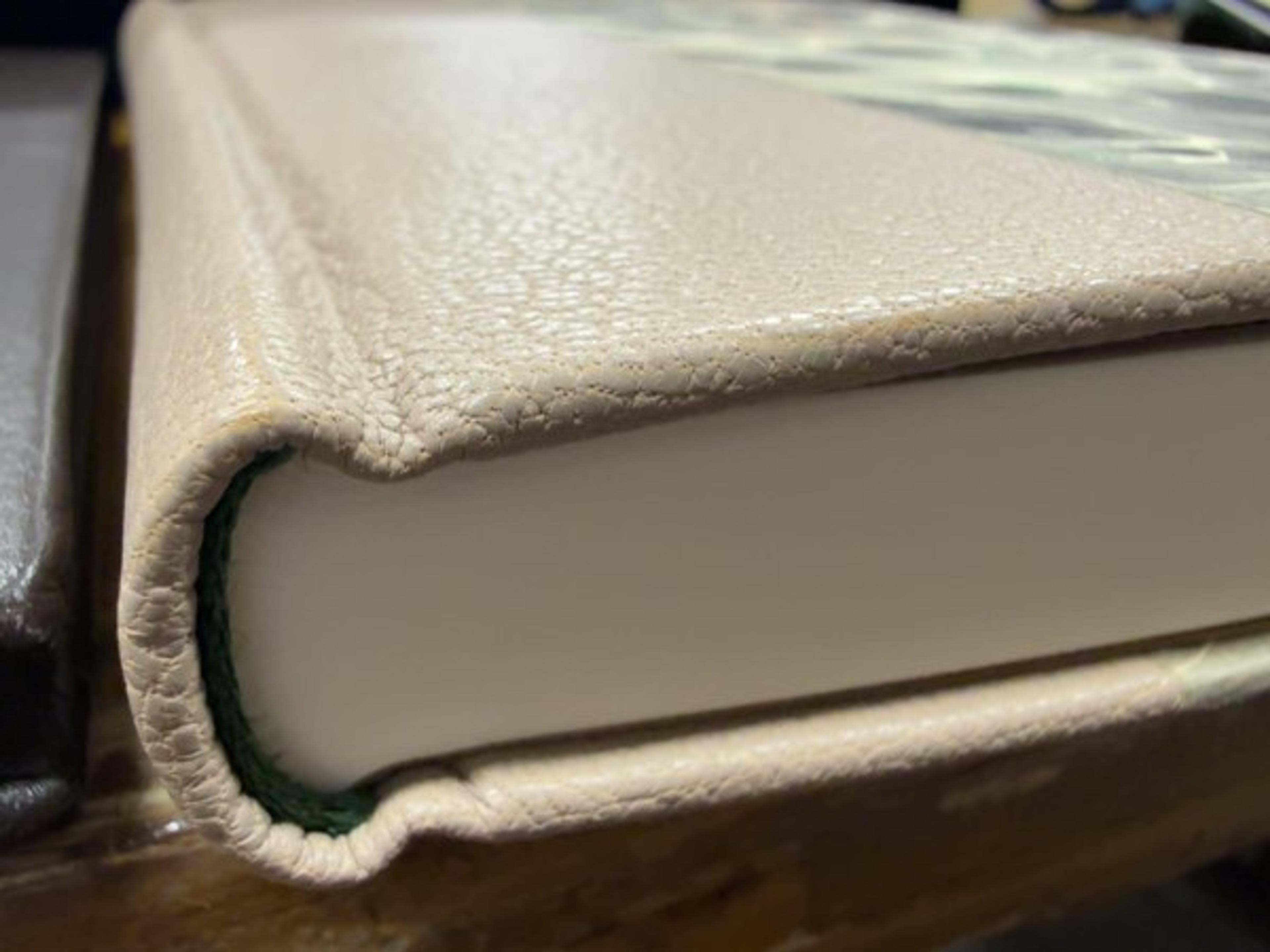
Neither option is automatically better. The right structure depends on the book’s size, page count, paper, and intended use.
In a sewn binding, folded groups of pages are joined with thread. At Marumizu-Gumi, we saw sections arranged on a sewing frame before the cover hid most of the construction.
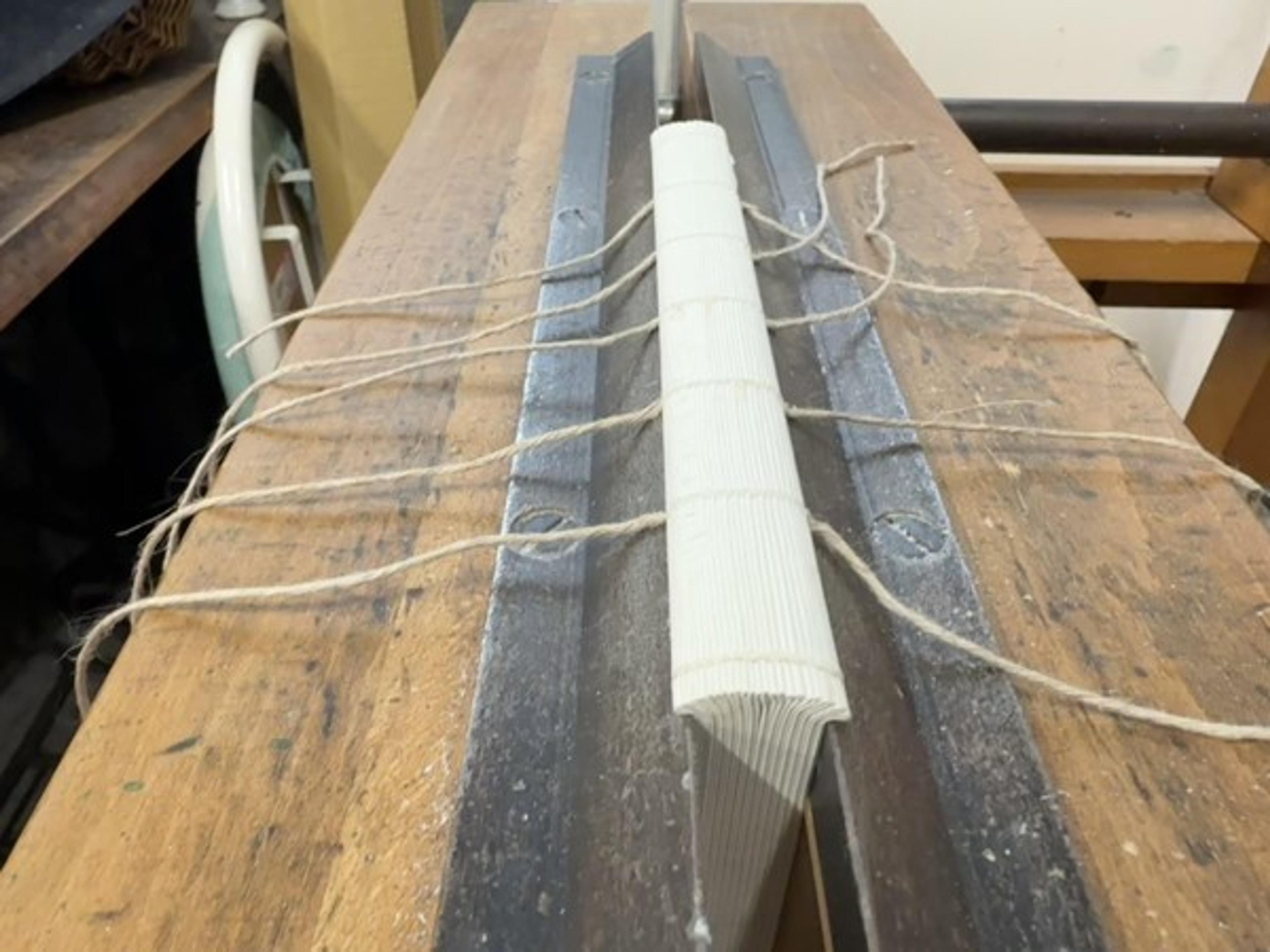
Once the sections are sewn into a single text block, the binder can round the spine into a gentle curve or leave it flat. Seeing both options side by side made the difference much easier to understand.
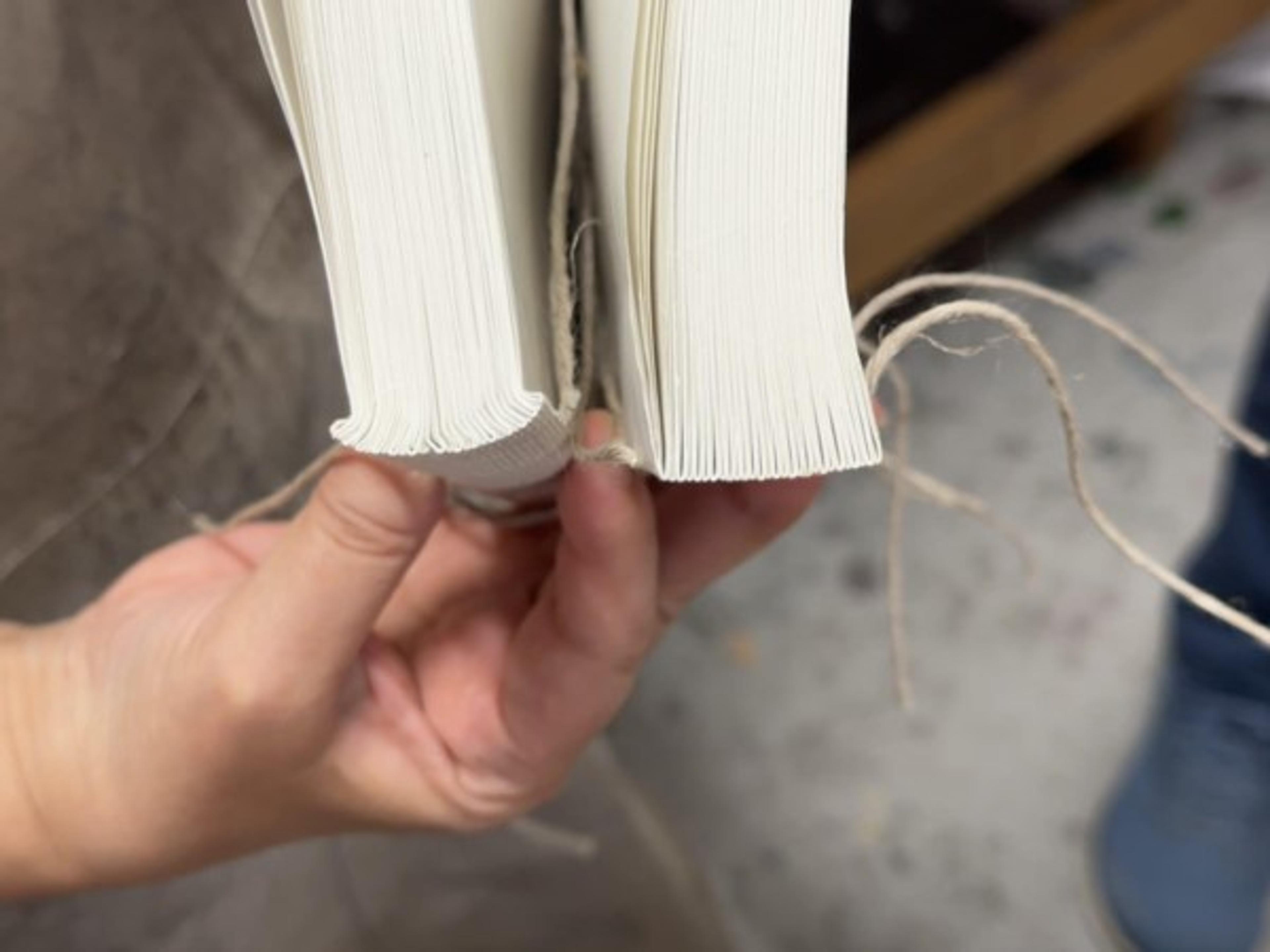
Japanese-style stab binding works differently. Its stitching remains visible along the side of the pages and becomes part of the design. It can be a striking choice for the right format, although it will not suit every long memoir or family history book.
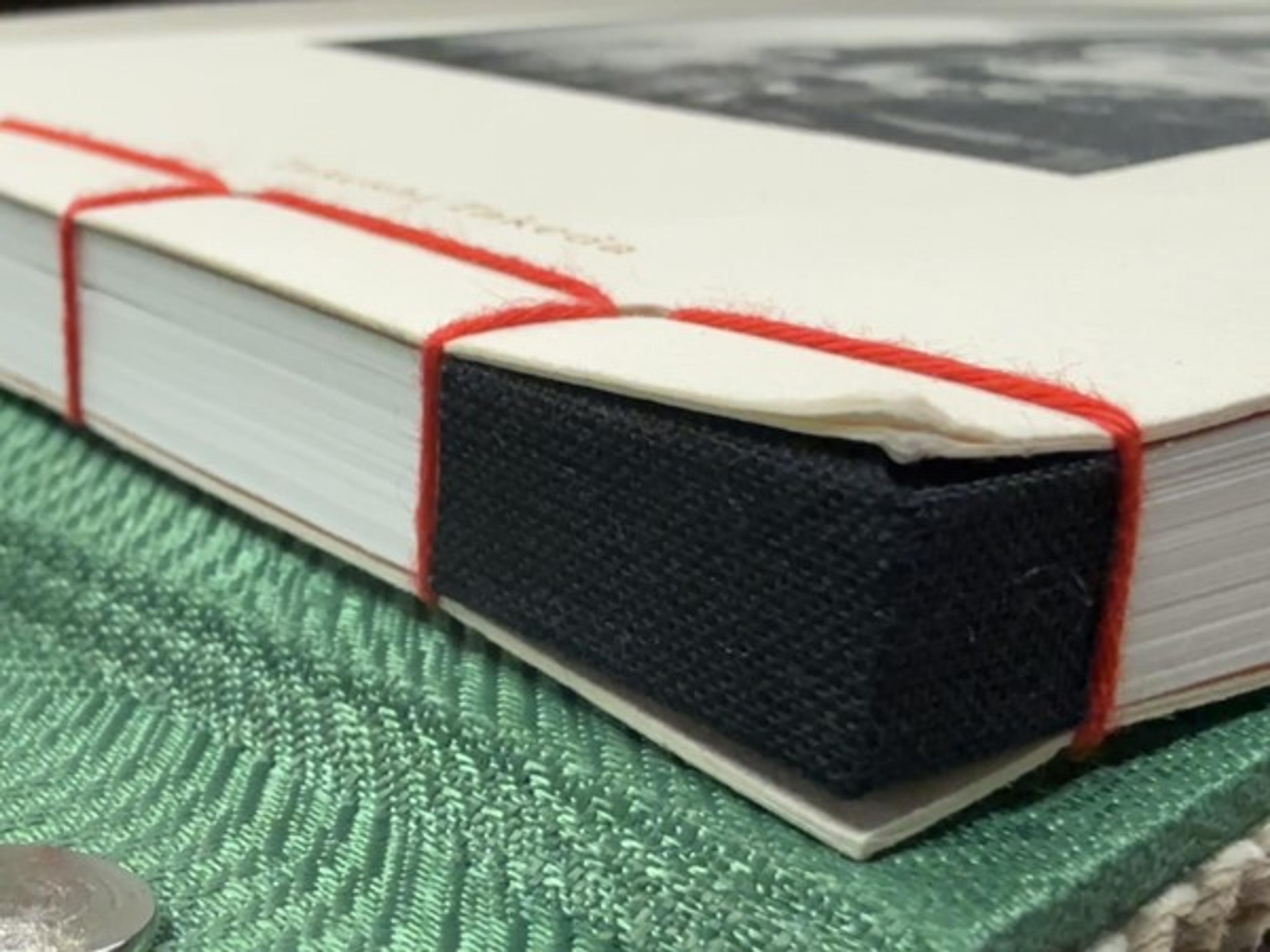
A family does not need to become expert in bookbinding. But if you are commissioning a special edition, it is worth asking what binding structure is recommended and why.
A good provider should be able to explain the choice clearly.
Boxes, sleeves, and presentation
A life story book may be displayed, wrapped as a gift, passed between households, or stored safely for years.
That is why presentation and protection matter too.
For selected editions, Marumizu-Gumi can make protective boxes, including My Stories Matter-branded designs or boxes created for an individual client. A fitted case protects the cover, but it also changes the experience of receiving the book. Opening the box becomes part of the moment.
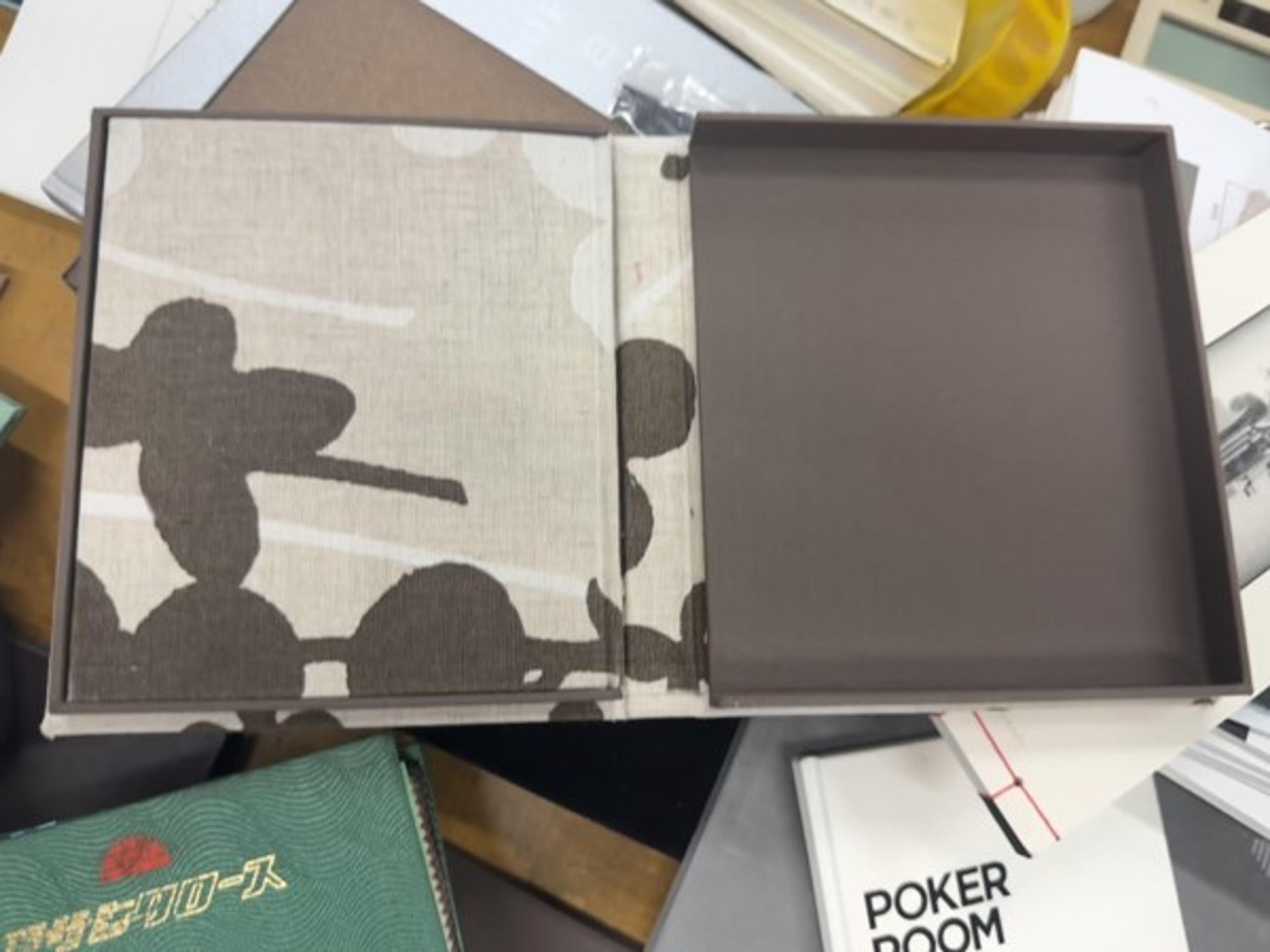
A fitted sleeve is another option. It holds the book closely while leaving the page edge accessible, so the volume can be removed easily.
We also photographed a finished book beside a blue My Stories Matter presentation pouch. It was a useful reminder that the handover matters too.
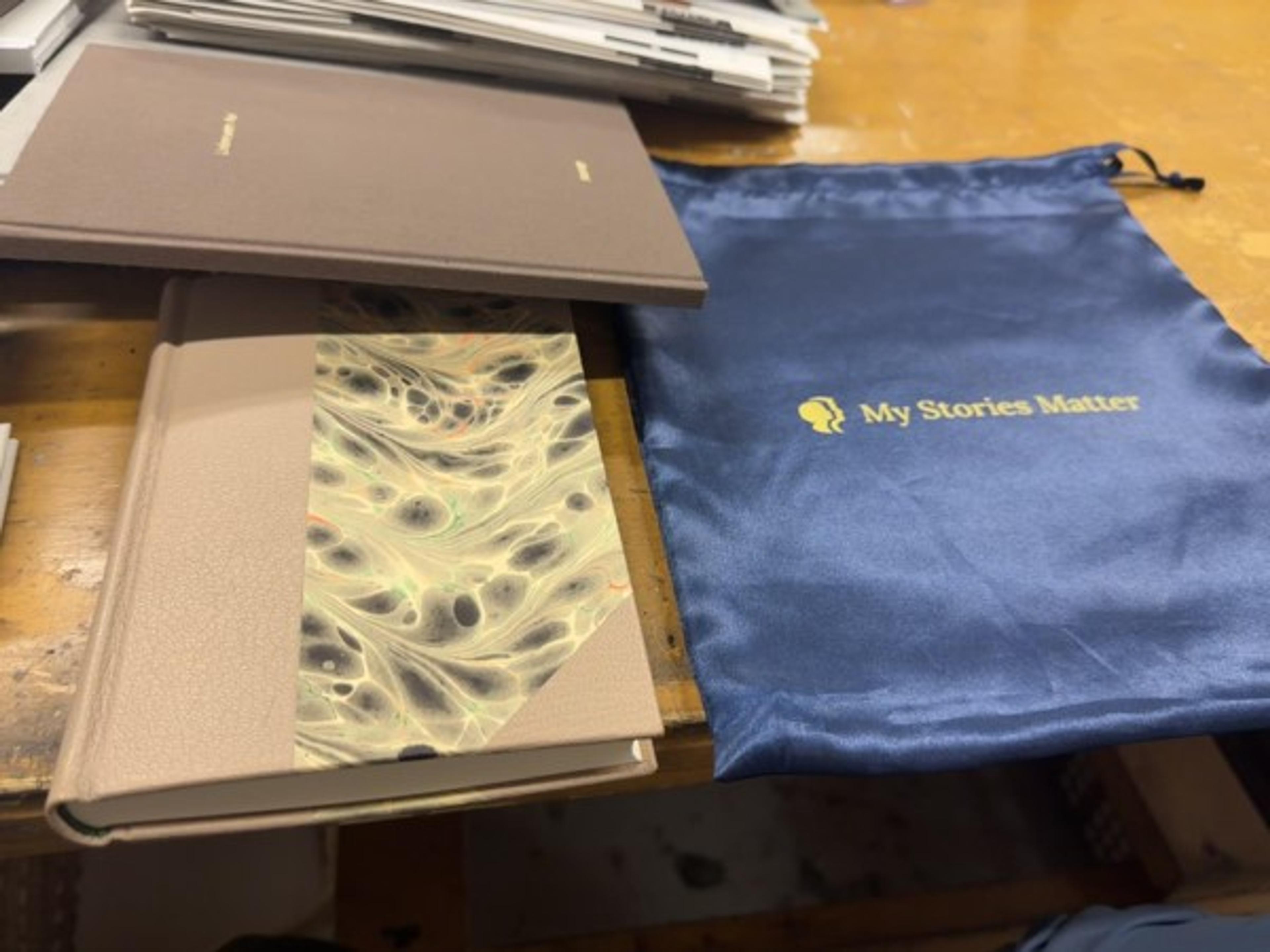
A life story book is often given with emotion. The way it is presented should feel worthy of that moment.
As with the cover and binding choices, these options are discussed for the individual project. They are not included automatically with every order.
Questions to ask about a custom life story book cover
If you are considering a custom or hand-bound life story book or memoir, these questions can help you understand what is really possible:
- What cover materials are available for this specific book?
- Can I choose the color, texture, lettering, foil, or stamping style?
- Can meaningful fabric or personal material be incorporated into the cover?
- Will I approve the cover design before the book is made?
- Is the book hand-bound, or produced through another method?
- What binding structure is recommended, and why?
- Are endpapers, headbands, boxes, sleeves, or presentation details available?
- Which options are included, and which are only available for selected special editions?
These questions matter because “custom” can mean different things. Sometimes it means choosing from a few templates. Sometimes it means designing around a specific person, story, photograph collection, material, and intended use.
For a life story book, that difference matters.
Thinking about a special edition?
My Stories Matter helps people turn memories, manuscripts, recordings, photographs, and family material into professionally designed hardcover memoirs and life story books.
You work with real people, see the book before it is printed, and approve the final proof. Depending on your starting material and the service you choose, we can also help with feedback, proofreading, editing, photo preparation, design, and printing.
For most families, our standard hardcover process is the right fit.
For selected orders, we can also discuss hand-bound editions produced with Marumizu-Gumi. The cover material, stamping, binding, endpapers, headbands, and protective housing will depend on the project.
Not every book needs every option. The aim is to choose details that suit the person, the story, and the way your family expects to use the book.
If you are thinking about creating a special life story book, talk with us about your book. We can walk you through the standard hardcover process, the hand-bound possibilities, and which route fits the material you already have.
You can also learn more about our memoir design and printing service.


