
How to write an autobiography: 7 simple steps

Every life contains stories worth preserving. An autobiography allows you to document your life journey in your own words, creating a lasting record of the experiences, people, challenges, and achievements that shaped who you are.

Unlike social media posts, family anecdotes, or scattered journal entries, an autobiography brings your life together into a single narrative that can be shared with family, friends, and future generations.
You don't need to be famous to write an autobiography. Some of the most meaningful autobiographies are written not for the public, but for children, grandchildren, and loved ones who want to understand the life that came before them.
Autobiography, memoir, or life story?
Before you begin writing, it's worth deciding what type of book you want to create. Although the terms are often used interchangeably, autobiographies, memoirs, and life stories are slightly different.
An autobiography usually aims to document a person's life in a chronological and comprehensive way, covering major events from childhood through to the present day.
A memoir or life story is often more personal and reflective. Rather than simply recording what happened, it focuses on memories, experiences, relationships, lessons learned, and the moments that shaped who you became.
Memoirs will also often focus on a particular theme, period, or aspect of life. Rather than covering everything, a memoir explores specific experiences in greater depth.

Many people writing for family choose a memoir or life story approach because it allows them to focus on the stories, wisdom, and memories future generations are most likely to treasure.
If your goal is to create a complete record of your life, an autobiography may be the right choice. If you'd prefer a more personal and story-driven account of your experiences, you may find that a memoir is a better fit.
For a deeper comparison, see our guide on the differences between a memoir and an autobiography. If you've decided a memoir is right for you, read our guide on how to write a memoir.
1. Decide who you're writing for
Before you begin writing, think about your audience. Are you writing primarily for:
- Children and grandchildren?
- Extended family?
- Friends?
- Future generations?
- The general public?
Knowing who will read your autobiography helps determine the level of detail, background information, and explanation you should include.
For many people, the primary audience is family. Future readers may know very little about the world you grew up in, so providing context can be incredibly valuable.

Think about what you wish you knew about your own grandparents or great-grandparents. Those are often the very details worth including.
2. Create a timeline of your life
One of the easiest ways to begin an autobiography is by creating a timeline. Start by listing the major periods of your life, such as:
- Childhood
- School years
- Early adulthood
- Career
- Marriage and family life
- Retirement
Then add significant events, achievements, challenges, relationships, moves, and milestones beneath each section.
Don't worry about writing yet. Simply focus on collecting memories and creating a framework for your story. A timeline helps reveal patterns, connections, and periods of life that deserve more attention.
3. Gather photographs and keepsakes
Old photographs, letters, certificates, newspaper clippings, diaries, and family documents can all help unlock memories.
Often, a single photograph can trigger details you haven't thought about in decades. As you gather materials, consider:
- Who appears in the photograph?
- Where was it taken?
- What was happening in your life at the time?
- What memories does it trigger?
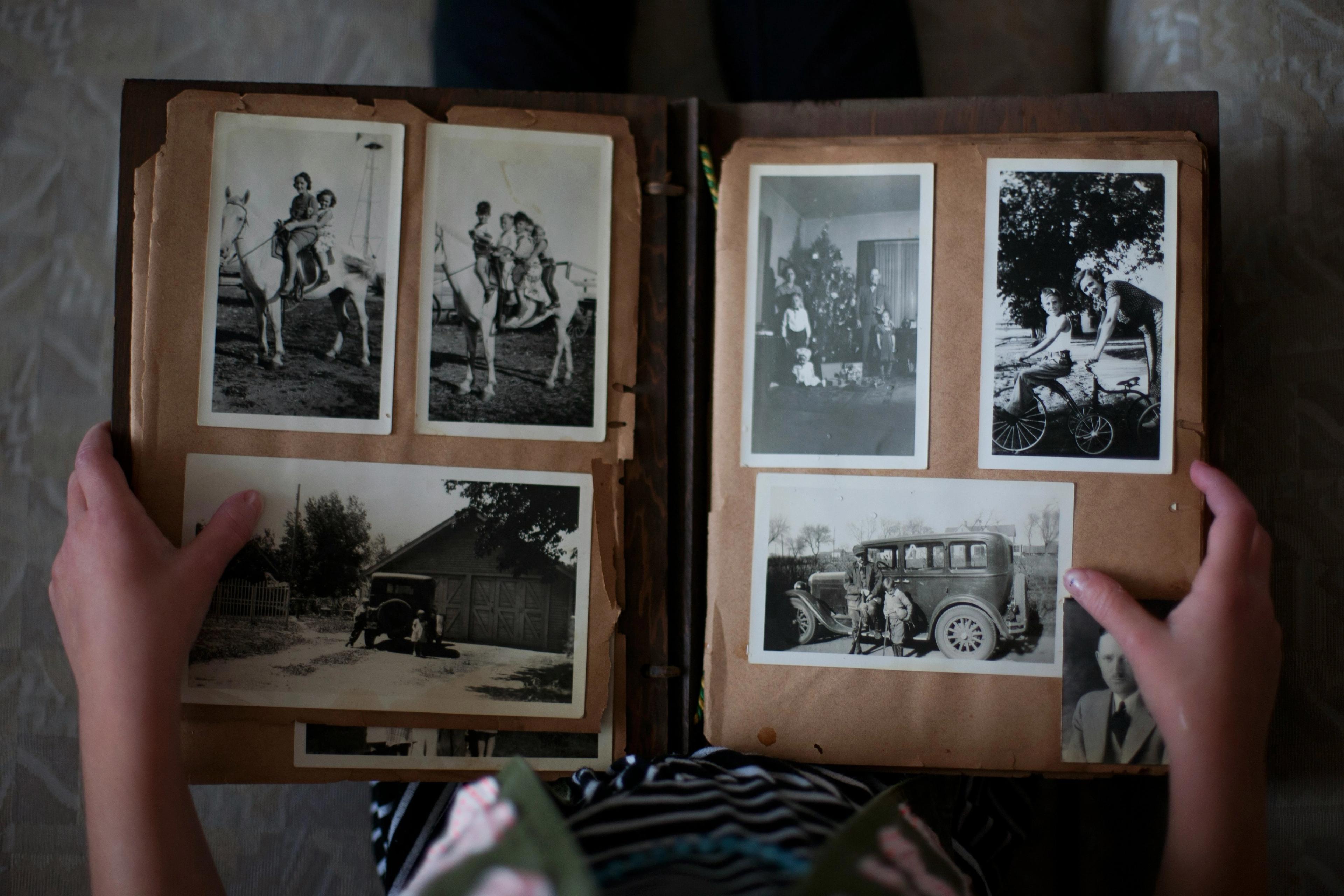
These visual prompts often become valuable sources of inspiration when writing.
4. Write one chapter at a time
Many people feel overwhelmed by the idea of writing an entire autobiography. The solution is simple: don't write an entire autobiography.
Write one chapter, one life period, or one story at a time. You might start with:
- Your childhood home
- Your first job
- Meeting your spouse
- Becoming a parent
- A memorable family holiday
- A major life challenge
Small sections are easier to write and often lead naturally into other memories. Progress builds momentum.
If starting still feels difficult, our guide on how to start writing your memoir can help you begin with one manageable memory.
5. Include people, places, and everyday details
Future generations won't just be interested in the major milestones of your life. They'll want to understand what life was actually like.
Describe:
- Important people
- Family traditions
- Everyday routines
- Schools and workplaces
- Neighbourhoods and communities
- Historical events that influenced your life
The ordinary details often become the most fascinating over time.
A description of your first family home, your first car, what school was like, or how your family celebrated holidays may one day be among the stories your descendants value most.
6. Reflect on what you learned
An autobiography is more than a timeline of events. The most valuable sections are often your reflections.
Consider questions such as:
- What lessons did you learn?
- What are you most proud of?
- What challenges changed you?
- What would you do differently?
- What advice would you give your younger self?

Readers don't just want to know what happened. They want to understand what those experiences meant. An autobiography will usually be long enough for you to do exactly this. Your perspective and wisdom are part of your legacy.
7. Edit and seek feedback
First drafts are rarely perfect. Once you've completed a section, set it aside for a few days before revisiting it.
Look for opportunities to:
- Improve clarity
- Remove repetition
- Correct grammar and spelling
- Add missing details
If you're comfortable doing so, ask a trusted friend or family member to read parts of your autobiography.
They may spot mistakes, suggest improvements, or remind you of memories you had forgotten. Sometimes a simple conversation can unlock an entire chapter.
Common autobiography mistakes to avoid
Trying to include everything
Not every event needs to be included. Focus on the people, experiences, and moments that had the greatest impact on your life.
Writing only facts
Facts are important, but feelings, reflections, and personal insights are what make an autobiography meaningful.
Waiting for the perfect time to start
Many people spend years planning an autobiography and never begin. Start with one memory, one chapter, or one story.
You can always expand it later.
Final thoughts
Whether you choose to write an autobiography, memoir, or life story, the most important thing is to begin.
The experiences you've had, the people you've loved, the challenges you've overcome, and the lessons you've learned all form part of your unique story.
You don't need to be famous to write a book about your life. Some of the most meaningful life stories are written for family rather than the public.
Future generations may one day treasure the stories that seem ordinary to you today. The important thing is to start recording them while you still can.
If you’d like help writing your life story, My Stories Matter can guide you from first memories to a beautifully designed finished book.


